⚠️ Not in London? This site probably isn't for you.
Home » Guide » Local Search Intent: Identify & Optimise For London Users
Local Search Intent: How to Identify & Optimise For London Users
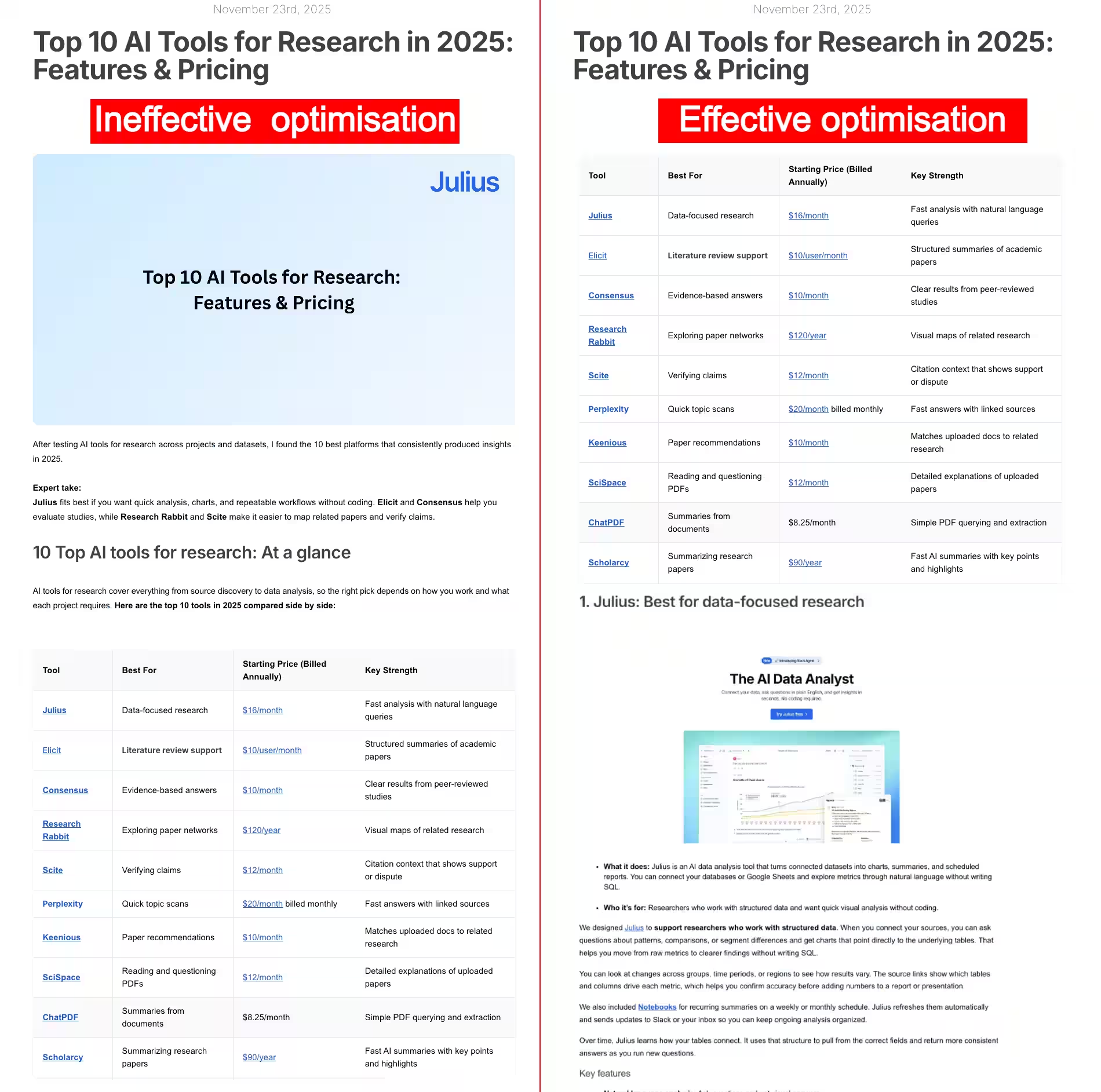
Note: This page’s been designed specifically for how users in London think when they search online. If you target global audience, this resource may not be suitable for you.
Normally, whatever people do to fulfil their everyday needs, whether that’s inner desire, demand, awareness, or the ease of buying something—when they look to fulfil those same needs through search, that’s search intent.
Search engines today aren’t just looking for keywords; they’re trying to understand the user’s intent and the “why” behind the query.
Here’s a real-life example of search intent. Sabbir has actually used this one before in his local keyword research article.
When you met a senior student to find a tutor for extra help with an AI subject, what did that full conversation look like when you were trying to choose the best tutor?
EXAMPLE 1
You: Hey Mike, I’m struggling with the Neural Networks module, and I think I need a tutor now. Do you know anyone who’s really good with this topic?
Mike: It’s definitely the hardest subject of the semester. About 40% of the class usually looks for extra help. In fact, I needed a tutor myself.
You: Could you suggest someone?
Mike: I can suggest three tutors who are very strong in this subject. Most students who need a tutor go to them, and I personally took lessons from one of them, Amelia, and I achieved great results, so she’s definitely worth considering.
You: Thanks, Mike. If Amelia helped you achieve great marks, she sounds like a strong choice. But you mentioned there are three. Who are the others, and how do they differ?
The conversation continues.
You would likely ask about where they studied, their qualifications, pricing, availability, and other details.
So, what intent led you to speak to a senior student, and what kind of answers was Mike providing that satisfied you?
In that situation, Mike was acting like a search engine or an AI assistant.
How to Identify Search Intent
Determining search intent is a bit like being a detective. For instance, you need to understand what’s happening deep in the human mind or what intent led to the search.
Example Of a Real-Life Scenario
There’s a sudden Tube strike in London. One day, an employee wakes up late at 8 am, but needs to be in the office by 9 am, and sees on Sky News that trains on their route are cancelled today because of the strike.
This employee will want to find an alternative route to get to the office quickly, rather than learn the reasons for the strike.
Before diving into the methods of identifying search intent, we need to understand how search intent changes over time.
How Search Intent Changes Over Time
Search intent isn’t static; it evolves based on technological advancements, cultural shifts, current events, changing user needs, and more.
Search engines, social media platforms, and even AI chatbots currently understand the human mind remarkably well. Their algorithms are now highly powerful and sophisticated, and they’re constantly evolving.
They continually test and evaluate user behaviour data and signals to display the most appropriate results through experimentation.
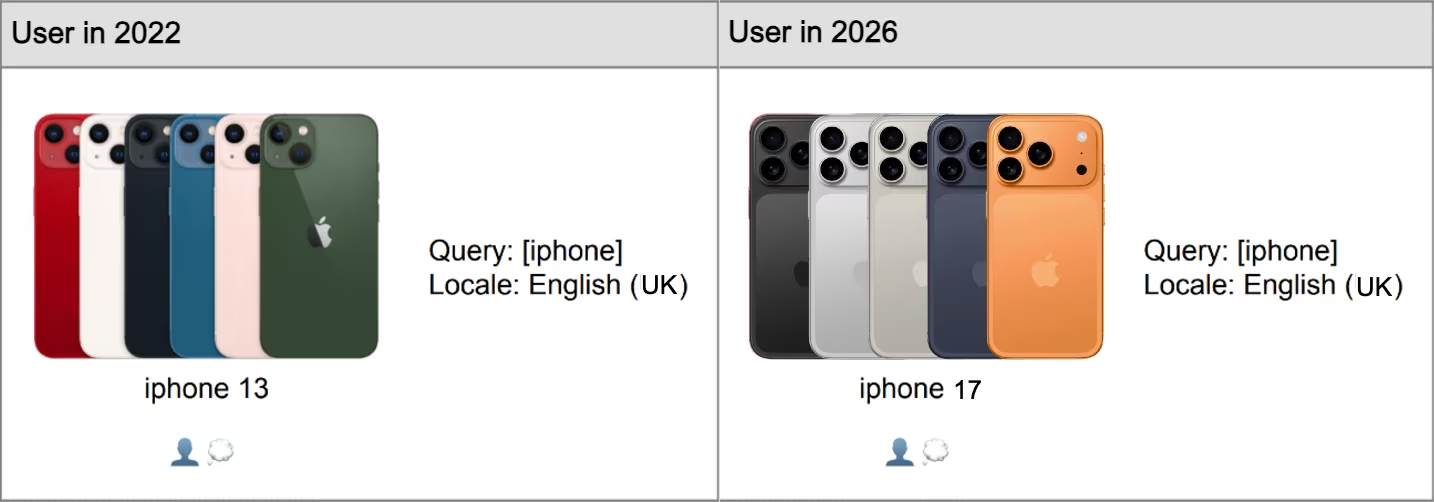
This is an example of how search intent changes, taken from the Search Quality Evaluator Guidelines {Part 2: (12.6)}. I have just modified it by adding the new iPhone 17 model.
Figure 6. Intent evolves over time. For a query like [iPhone], the ‘correct’ result shifts from the 2022 iPhone 13 to the 2026 iPhone 17, reflecting current user expectations.
Methods Of Identifying Search Intent
There are multiple methods for identifying search intent. I’ll show them to you, but you can stick to one or two.
Method 1: Customers Asking
If you can learn what the user wants to know directly from them, without having to learn it from anywhere else, how is it?
If you can utilise this method properly, it’ll be crazy. You can’t even imagine.
I always recommend to my clients: keep in touch with your existing customers, ask and help them in the right way – they’ll write your SEO strategy.
Marcus Sheridan has outlined this in his book “They Ask, You Answer” on how to create content by answering customers’ questions honestly and effectively.
Here is the simple step-by-step framework.
NOTE
Customers won’t share their data if they don’t trust you. If you can run this method, you have to build a good relationship with your customers. Otherwise, this method won’t work.
Step 1: Arrange an event or a webinar
Before asking customers directly about their intent, you need to establish an environment where they feel comfortable sharing their true thoughts.
Assure confidentiality: Make it clear their feedback won’t be used against them.
Frame it as a mutual benefit: “We want to serve you better, and your input helps us do that.”
Step 2: The Direct Question
Here are some sample specific questions you can ask customers to determine their search intent and capture fresh search memories:
What alternative solutions did you find during your research, and why did you choose this one?
Was there a particular case study, testimonial, or demo that convinced you to choose this solution?
When did you think, “I need some time to make a decision,” and why?
Step 3: Listening for intent clues
Train yourself and your team to recognise intent signals in every interaction:
Pay attention to frustration language: “I wish I could find…” or “Why isn’t there…”
Note confusion patterns: “I don’t understand how…” or “What’s the difference between…”
Capture wish statements: “It would be great if…” or “I need something that…”
PRO TIP
Whenever you acquire a new customer, you can easily ask these types of questions to determine their search intent.
Alternatively, you can implement this process without any investment by using email and launching a testing model on your website.
I hope I’ve been able to help you understand a bit about how you can determine search intent by talking to your customers.
If you still don’t understand, get in touch with me. I’m always happy to help.
Now it’s time to move on to how you can identify user intent using search engines, especially Google.
Method 2: Using Search Engines, Especially Google
If you want to use different methods depending on the tools’ level without the method of talking to customers, Google should be your first priority.
Because Google currently understands the human mind the best. Google’s current algorithm is very powerful and deep. Google displays the most appropriate results by experimenting based on different kinds of signals.
What follows is a simple step-by-step framework.
Real Life Scenario
Imagine you can make delicious chocolate cake. One day, your friends and colleagues visit your home and you offer them the cake.
After eating it, they’re super happy and suggest you sell it online. Inspired by their feedback, you decide to start selling the cake through your website and begin focusing on organic search marketing.
Now you’re at the crucial part of SEO: keyword research and trying to understand search intent.
Step 1: Analyse The SERP
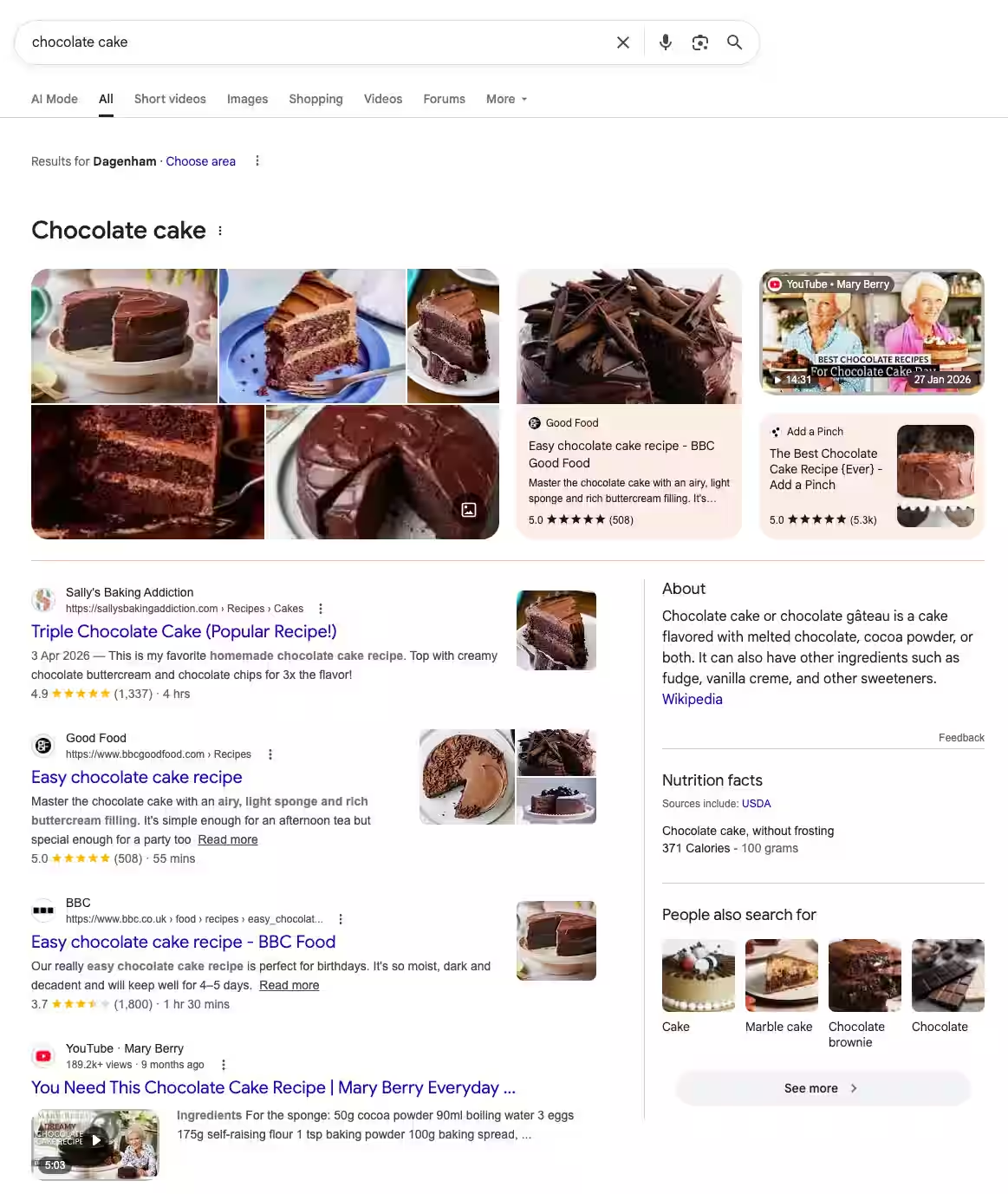
Go to Google and search for the keyword “chocolate cake”.
Figure 7. This SERP for ‘chocolate cake’ is dominated by ‘how-to’ content (recipes and tutorials).
Step 2: Visit Top Pages
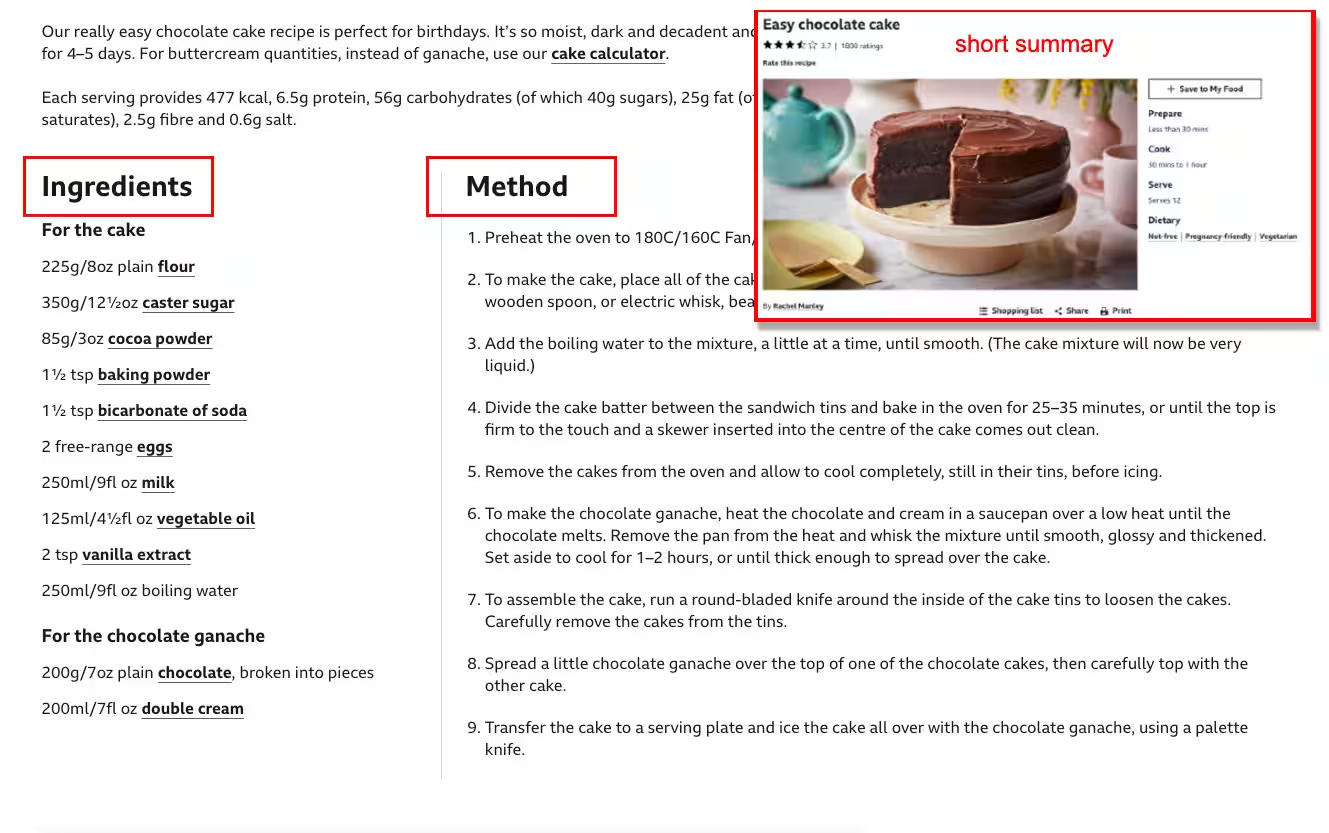
Visit some of the top pages and analyse the structures, the topics they cover, and what types of content they’re trying to get consumed, etc.
Figure 8. Visiting the page confirms the intent. This is how you can identify the current search intent.
Key takeaways: If you target the keyword “chocolate cake” with a product page instead of a recipe page, you’ll never win the SERP for this keyword, because users want to learn how to make it, they don’t want to order it online.
In my opinion, you now understand why search intent is important, and I hope you’ll be able to identify it using these kinds of methods.
How to Optimise Search Intent
When it comes to optimising search intent, a small percentage of marketers recommend going beyond the four traditional intents: informational, commercial, navigational, and transactional.
For Example
You know they want information, but why do they need it? Are they looking to be Helped (a how-to guide) or Reassured (a safety review)?
You should understand what’s happening behind the scenes.
Google discovered how consumer needs drive search and found that users come to Google with six specific needs: Surprise Me, Help Me, Reassure Me, Educate Me, Impress Me, and Thrill Me.
Consumer need
Explanation
Surprise Me
Search is fun and entertaining. It is extensive with many unique iterations.
Thrill Me
Search is a quick adventure to find new things. It is brief, with just a few words and minimal back-button use.
Impress Me
Search is about influencing and winning. It is laser focused, using specific phrases.
Educate Me
Search is about competence and control. It is through reviews, ratings, comparisons, etc.
Reassure Me
Search is about simplicity, comfort, and trust. It is uncomplicated and more likely to include questions.
Help Me
Search is about connecting and practicality. It is to-the-point, and more likely to mention family or location.
I’m sharing a customer’s likely buying circle using three needs, which might help you understand why you need to look beyond.
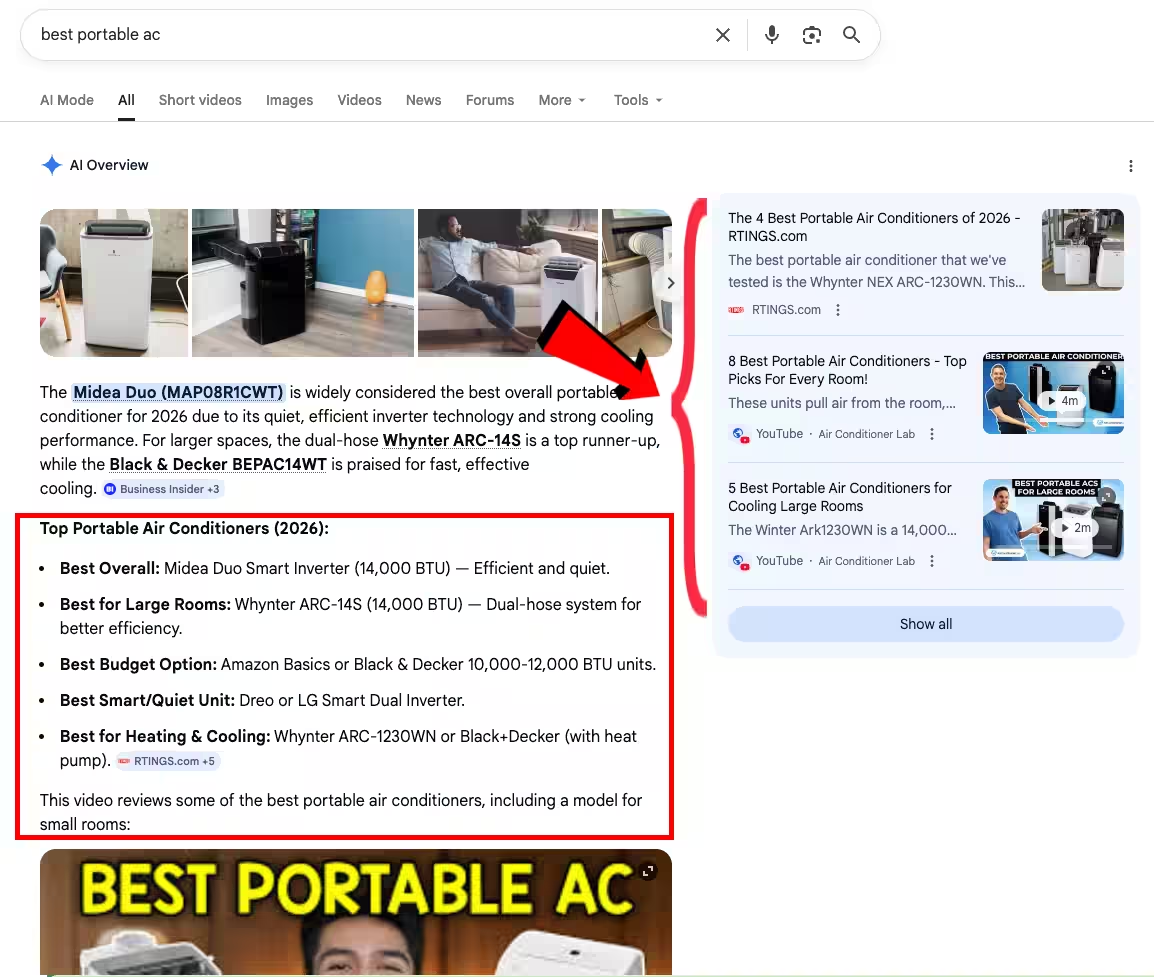
Imagine you live in Bromley. For some reason, you feel you need a portable air conditioner. Now you search on Google for “best portable AC”.
Here’s the journey
By searching this keyword, you want to learn about or decide which AC is right for you by comparing options.
That’s why Google is guiding you so that you can choose which brand will be the best for you through comparison-type content, like blog posts and videos.
This is your learning phase, which Google has identified as “Educate Me”. So, while optimising content for this ‘educate me’ intent, how can you teach your users in a way that helps them understand which option will be the best for them, just as a good teacher guides their students?
Next, while selecting a brand, you’ll likely search for or check out their warranty. That means you want to know whether they’ll repair, replace, or refund the product if it develops a fault or defect within a specified period, without any hassle. Google has called this “Reassure Me”.
In my opinion, I’ve been able to help you understand a bit about why you need to go beyond traditional intent. Now, let’s move on to the final stage, where you will learn how to optimise your content.
Method 1: Ask Your Existing Customers
Let’s get back to the customer asking process. When you talk to your customers directly, or through a testing model or email, try asking these types of questions. Here they’re:
What type of content (blogs, videos, reviews) was most helpful in your decision-making process?
Which search results made you click away immediately?
How long did you spend on a webpage before feeling that you had found your answer — seconds, minutes, or longer?
Which content formats did you spend the most time on?
What content felt like marketing rather than genuine help?
Which platform (Google, YouTube, AI chatbots, forums, etc.) did you spend the most time on?
NOTE
I’ve just given you an idea; you’ll design it yourself.
You’ll prioritise the types of content that most users respond to.
For instance:
If most users respond ‘video’ to this question, “What type of content (blogs, videos, reviews) was most helpful in your decision-making process?” that means you need to create and upload videos to your channel.
If most users respond with “summary, then full content” to this question:“Did you look at the summary or the full content of the comparison first?” you should place a summary box immediately after page title, without a single sentence. Like this:
Figure 9. I’m sure that users aren’t interacting with the image; they might be interacting with the summary box and then the full content. In fact, 99% of the time, users skip these types of images.
PRO TIP
Follow your heatmap tool. It’s a major asset. You need to prioritise by testing where users are interacting and where they’re not.
Method 2: Search Engine Results Page
I apologise that I missed one thing that should have been mentioned: in neuromarketing, you need to show your users within 3–5 seconds that your website is just for them.
So, when you optimise for user intent, you should pay close attention to it. If users go back to the results page immediately and clicks another result after landing on your page, you risk pogo-sticking, which Google dislikes.
By the way, bounce rate and pogo-sticking have completely different meanings.
Let’s get back to our concept on optimising search intent via the SERPs, especially Google.
Before we dive into that, we first need to understand one thing: the intent gap.
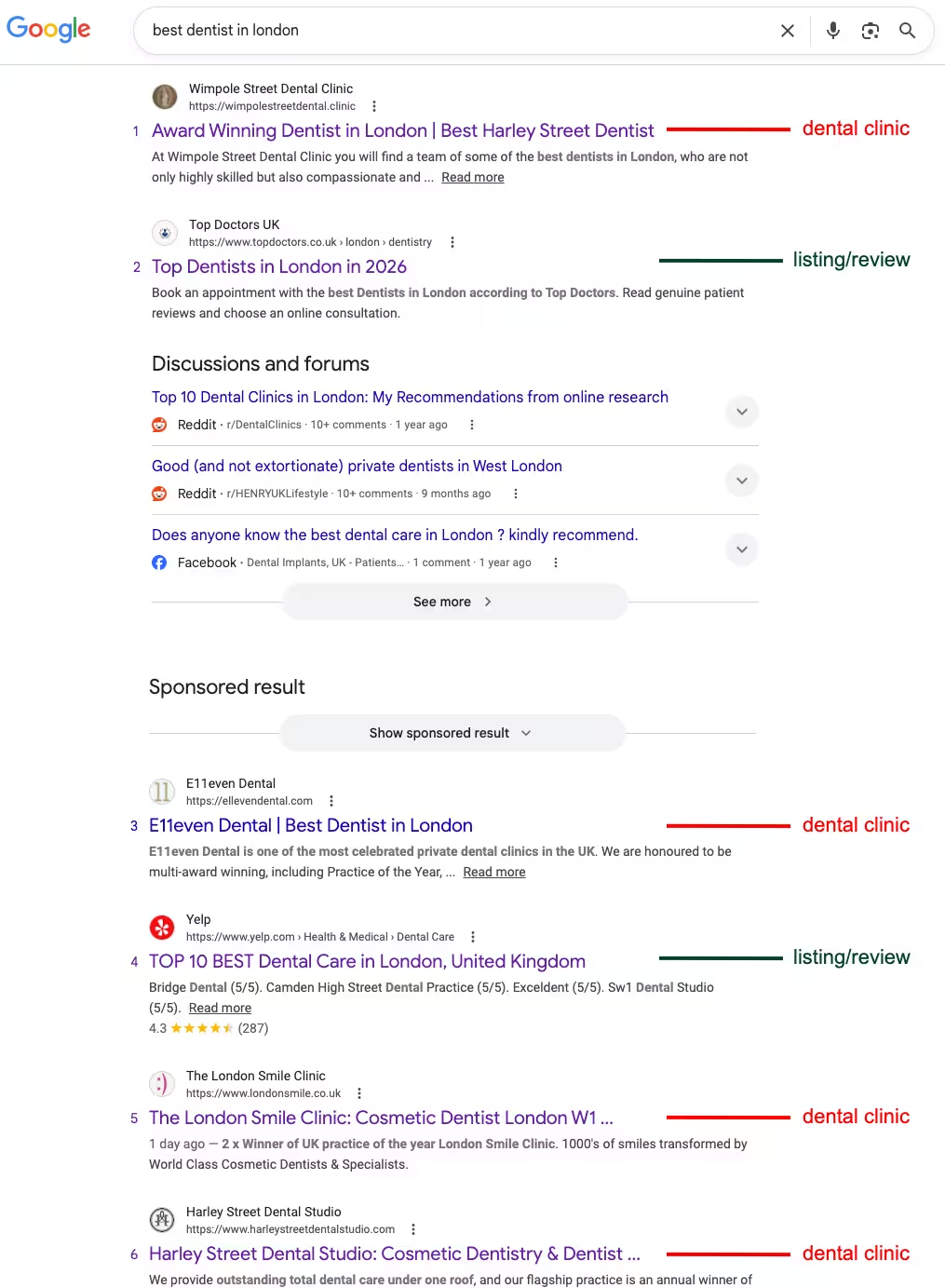
Since Google ranks webpages based on intent rather than keywords, you need to convert your keyword gap analysis into intent gap analysis. Look at the SERPs.
If dental clinic websites want to exclude two review or listing websites from the SERPs, it won’t be possible, even if a world-class SEO expert works with the websites.
Why Search Intent Plays Vital Role In SEO
Search intent isn’t just an SEO theory. It is essential for retaining users and saving them time. In a city as competitive as London, getting search intent wrong is a costly oversight that sends your hard-earned effort and capital straight out the window.
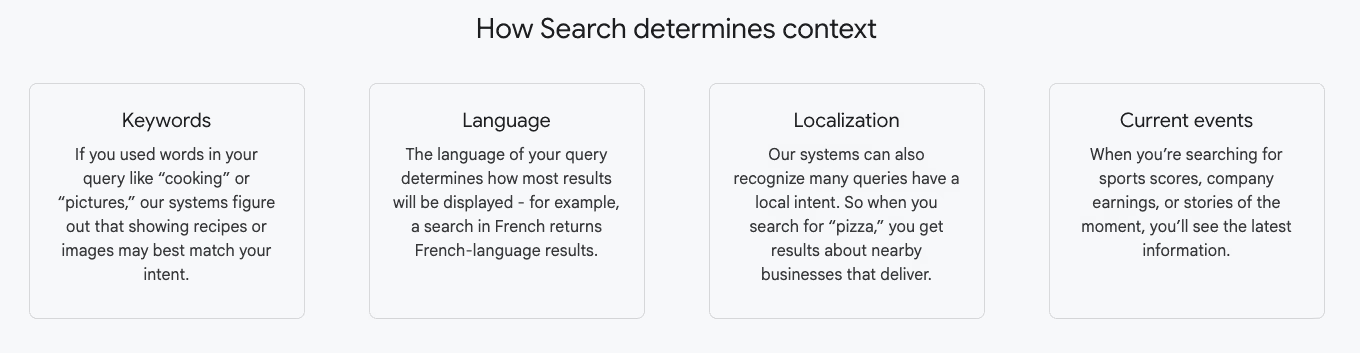
Figure 1. How Google Search understands the meaning of queries: a breakdown of the four pillars of context
A Real-Life Example
My mum is a great cook, and her pizza is delicious. On 25 September 2025, I told her, “I want to eat pizza.” Because she knew how to make it, she went to the kitchen and started cooking.
However, if she had never made pizza before, she wouldn’t have gone to the kitchen. Instead, she likely would have said, “OK, let’s order one online.”
This story demonstrates how the same request can lead to different actions.
Benefits Of Understanding Right Search Intent
There are lots of benefits to understanding the right search intent, such as higher rankings, better conversion rates, a stronger long-term strategy, greater authority, and improved user satisfaction.
These are mentioned on most websites, so I don’t need to repeat them. Instead, I want to introduce “Featuring on Personalised SERPs”.
Featuring on Personalised SERPs
There are many ways Google uses to personalise the SERP, such as past behaviour, session context, cross-platform activity, location, device, and more. This is done so users can quickly find relevant answers and solve their problems.
In my opinion
If your website can successfully satisfy a user who arrives via a search engine, especially Google, it doesn’t just mean you’ve satisfied them – it also means Google has satisfied them too.
As a result, the user is more likely to return to the platform to solve future problems and find the best answers.
Google has so much data that it’s beyond imagination, and it can predict what your next search will be and what your intent is.
So, if you use personalised SERPs effectively, Google will continue to recommend your contents to those users when their future searches match your content’s intent.
It’s like when you get good advice from a friend or colleague when you need help and you go back to the same person again in future if you need further help, because you already know the suggestions he gave were great. He becomes your first priority.
For this to happen, you must help users find the right and relevant answers and solutions.
Since previous users have been satisfied with your content, Google expands its reach to more users based on those past interactions.
So, if you want to get this opportunity and its benefits, you must understand the right search intent.
Types Of Search Intent
There’re four main types of search intent used in SEO: informational, navigational, commercial, and transactional.
However, in 2026, you need to go beyond what has been discussed in the optimisation section. Now, let’s take a quick look at a breakdown of traditional intent in the context of London:
Metric
User Goal
Keyword Example
Content Type
Informational
To find an answer, learn, or understand something
“benefits of hiring a personal trainer for weight loss”
Blog post / Knowledge centre
Navigational
To get to a specific, known website, brand or page
“safe space fit studio reviews”
Brand Homepage / Review page
Commercial
To research and compare options before a purchase or commitment
“best personal trainer for female in Newham”
Comparison list
Transactional
To complete an action: buy, book, sign up, etc
“online personal training booking Newham”
Landing Page / Contact Page
Information Intent
Users want to find an answer, learn, or understand something rather than making a purchase or navigating to a specific brand.
REAL LIFE EXAMPLE 2
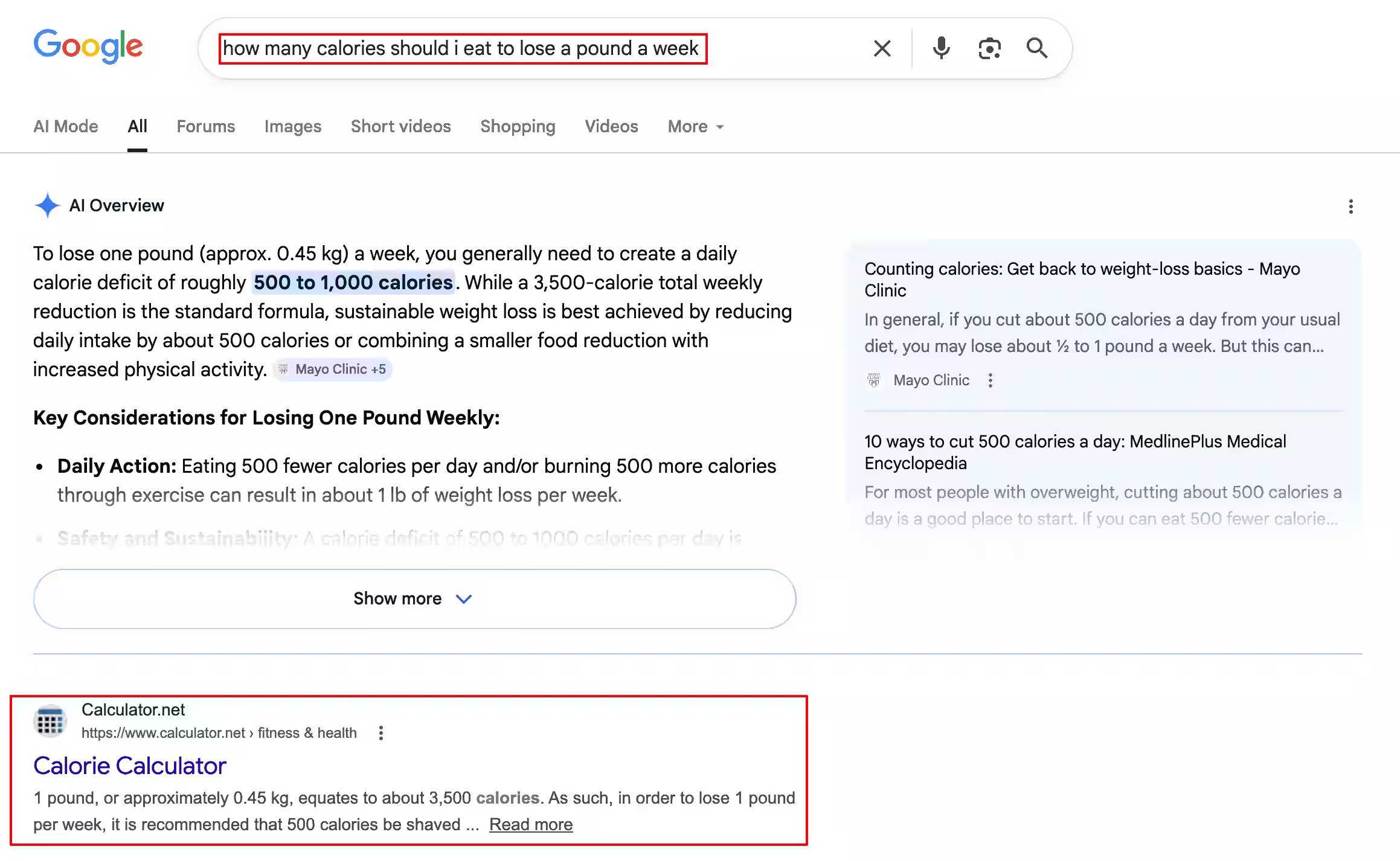
Imagine asking your personal trainer: “How many calories should I eat to lose a pound a week?” If she simply responds, “You should eat less,” that answer is neither relevant nor helpful.
It’s vague and fails to address the specific intent behind your question.
A truly expert response would provide concrete calculations and actionable guidance, such as: “To lose 1lb (≈0.45kg) per week, you need a weekly deficit of about 3,500 kcal—roughly 500 kcal a day.
If your maintenance level is around 2,500 kcal, aim for 2,000. However, we should adjust this based on your age, height, and activity level.
Figure 2. Example of informational intent—Google provides direct answers and an interactive calorie calculator for a weight‑loss search query to satisfy user intent
Navigational Intent
Users want to navigate straight to a specific website, brand, or page they already have in mind. They can quickly and easily fulfil their needs by going directly to their preferred brand or website
REAL LIFE EXAMPLE 3
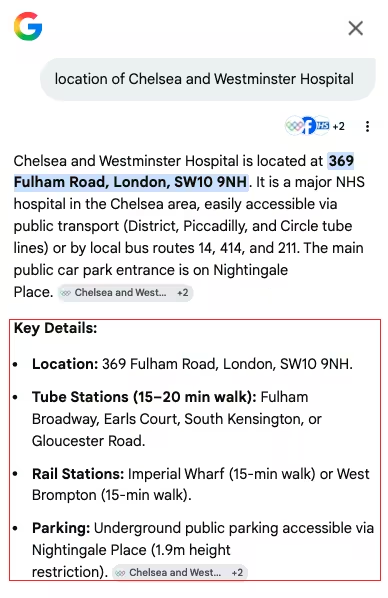
If someone asks me for the location of Chelsea and Westminster Hospital, I’ll understand they’re looking for that specific hospital — not any other.
In such cases, I should provide the exact location details, nearby Tube and bus connections, and a map link for Chelsea and Westminster Hospital.
Figure 3. Example of navigational intent: since Google understood that my intent was to get to the hospital, it provided the nearest Tube stops, parking tips and directions, rather than just the location.
Commercial Intent
Users want to investigate, research and compare options before making a final purchase decision.
During this phase, users actively try to discover which products, services, brands, or information are most suitable for their specific needs and circumstances.
REAL LIFE EXAMPLE 4
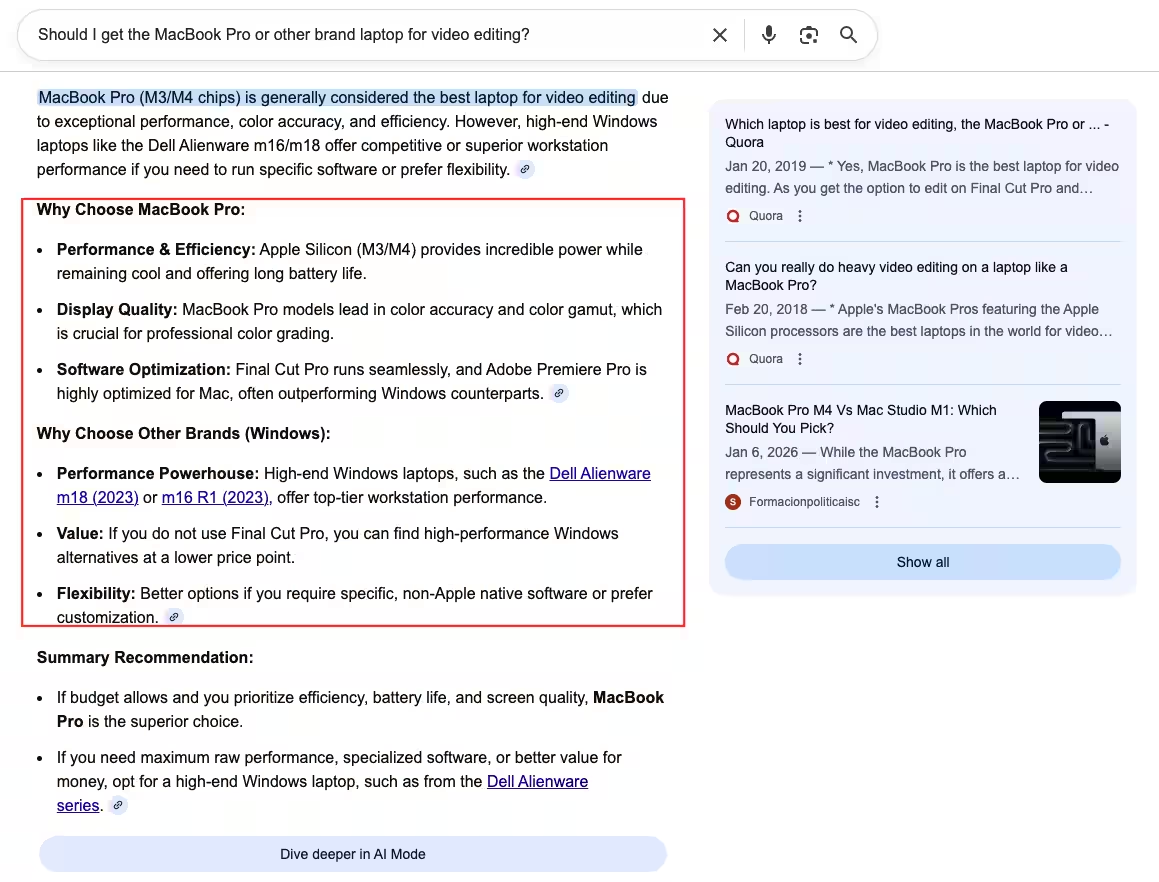
Imagine a female freelance video editor working in a coffee shop in Shoreditch (East London). Her current laptop is lagging while running Adobe After Effects. She has a budget of £2,000 and knows she needs an upgrade by next month.
She might go to a Currys or an Apple Store on Regent Street. Instead of saying “Give me this laptop,” she might ask a staff member: ‘I do heavy 4K video editing. Should I get the MacBook Pro or another brand laptop?’
She might spend some time comparing and testing options and features of both laptops. Then she might choose and buy a laptop according to her needs.
Whatever she has done before the final purchase is called commercial intent.
Figure 4. A perfect example of commercial investigation intent would be someone searching Google for a detailed comparison between a MacBook Pro and other laptop brands specifically for professional video editing work.
Transactional Intent
User ready to make a purchase or complete a specific action: buy, book, sign up, etc. They’ve done their research, made their decision, and now want to execute the transaction.
REAL LIFE EXAMPLE 5
Take the recent launch of the iPhone 17 Pro Max, for instance.
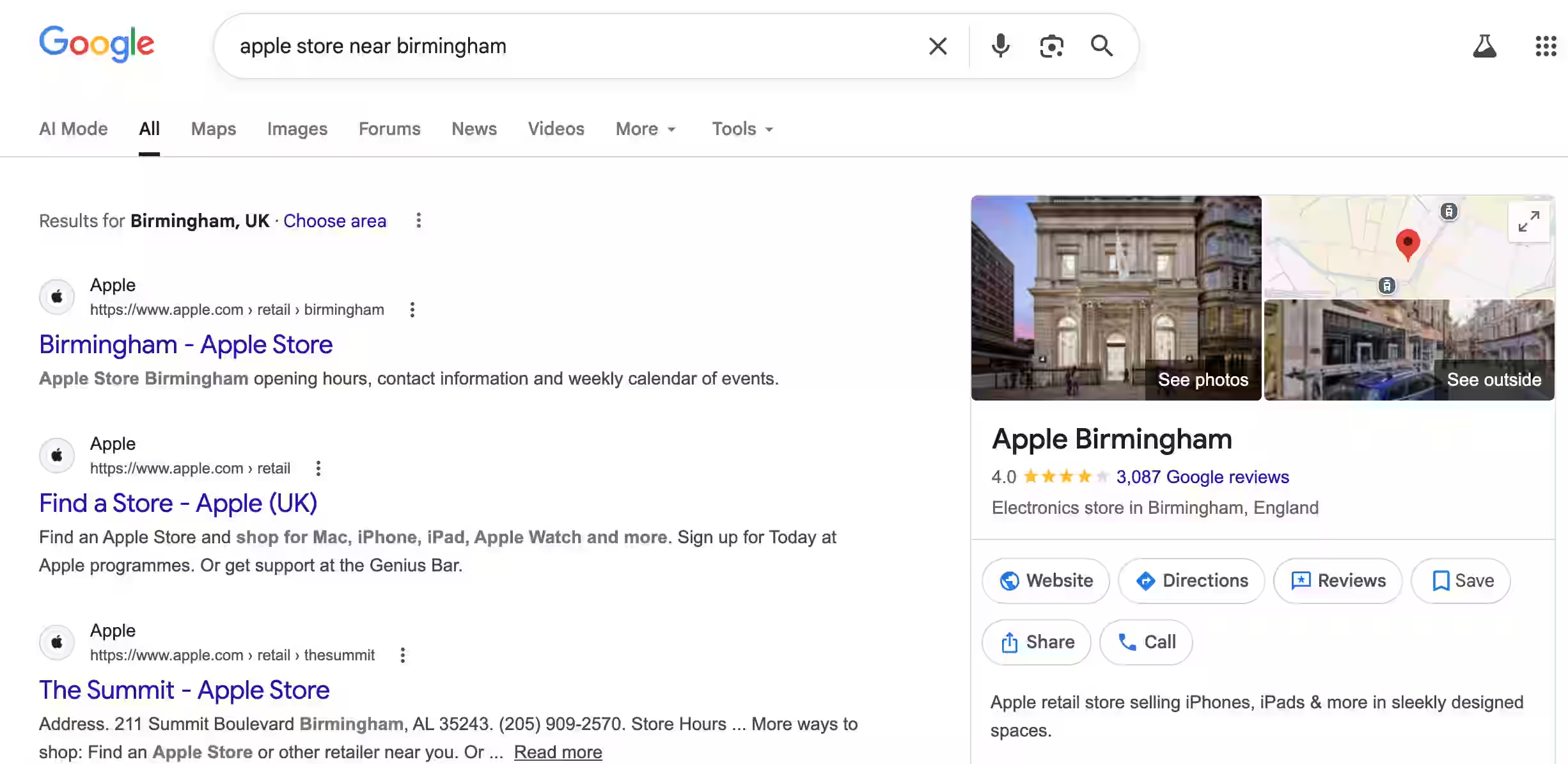
Imagine you were in Apple store Birmingham when you witnessed a perfect example. A young chap, about 25 years old, walked straight into the shop and said to the shopkeeper:
“I’ll have an iPhone 17 Pro Max, please.”
The shopkeeper fetched the phone. Without inspecting it, without asking about features, without comparing it to other models, the young man immediately said:
“Could you wrap that up for me, please?”
He then paid the full amount in pounds, took the packaged phone, and was on his way within minutes.
Watching this unfold, it was perfectly clear: this young man had arrived at the shop ready to buy.
Figure 5. Satisfying transactional intent: Google provides ‘Directions’ and ‘Call’ buttons immediately, removing friction for users ready to make a purchase or contact at the Birmingham Apple Store.