SEO Local Keyword Research is the process of understanding what people type into search engines within their location. The goal is to find, analyse and select the most relevant terms, then provide content to satisfy search intent by connecting users with local products or services that solve their problems
However, before you start this work, you need a solid understanding of your customers. This is often referred to as audience or prospect research.
You’ve not done this groundwork yet, stop right here. In my view, there is no point reading further just yet. Instead, use the Table of Contents and jump straight to the section on Audience Research.
NOTE
Sometimes I’ve mentioned keyword, sometimes query, sometimes search term, and sometimes problem, whichever fits to help you understand the concept best. But ultimately, it is all about the problem.
Local Keyword Research Guide For London Business: In 3 Steps
I’ll walk you through a practical local keyword research framework to build a proper SEO strategy for your business. You won’t just find keywords, you’ll learn to measure their true value and align everything with how your customers actually search and convert.
Step 1: Find & Identify Local Keywords
Effective research starts with your business data, not tools. Here is the framework to find keywords that drive revenue.
List your services or products and locations
For example, If you run a home services business in Ealing (e.g., cleaning)
Your service list probably looks like this
Sofa cleaning
Curtain cleaning
Kitchen cleaning
Move in or move out, etc
Or, if you operate a car rental, law firm, barbershop, or pet service in Hounslow,
List your offerings:
Service 1
Service 2
Service 3
Service 4, etc
Now you need to filter out which specific service you want to sell first through your website and business profiles, including Google, Bing and local directories.
How do you choose? Look at your data or Ask yourself:
What are my existing customers already booking the most?
Where do I have the most expertise and the highest customer satisfaction or you’ll be able to earn satisfaction in future?
You can consider demand and margin as well.
NOTE
You can research keywords for all your services at once (Core Service, Service 2, Service 3) but you must implement them strategically.
Never expand to Service 2 until Service 1 is dominant in local search and converting reliably. Only then should you start publishing content for your next services.
Why I recommend focusing on one service first:
Time is money
Build subject-matter expertise fast
Generate immediate revenue
Lower cost (better ROI)
PRO TIP
Focus on one core service and own it. You can build subject-matter authority faster than your generalist rivals by dominating a single service.
Your goal is simple: when a local customer needs that service, your name or brand must automatically be the first one that pops into their head. In marketing, we call this Top-of-Mind Awareness (Brand Recall).
Mine for queries
Now that you’ve locked in your core service, you need to find the specific queries your customers are using. What problems are they facing? What solutions are they frantically typing into Google?
While tools can help, manual research should come first to find untapped, freshness insights.
Tools only show you historical data that everyone else can see. To find fresh, high-value ideas that your competitors haven’t touched, your priority must be manual research.
In this section, we will look for the specific problems users are facing. Your goal is to identify how your solution solves them easily. Remember, you have to help people first.
By the way, it might be important here to understand the difference between implicit and explicit keywords—what they are, and how they differ
Implicit vs Explicit Keywords: What is the Difference?
Feature
Implicit Keywords
Explicit Keywords
Definition
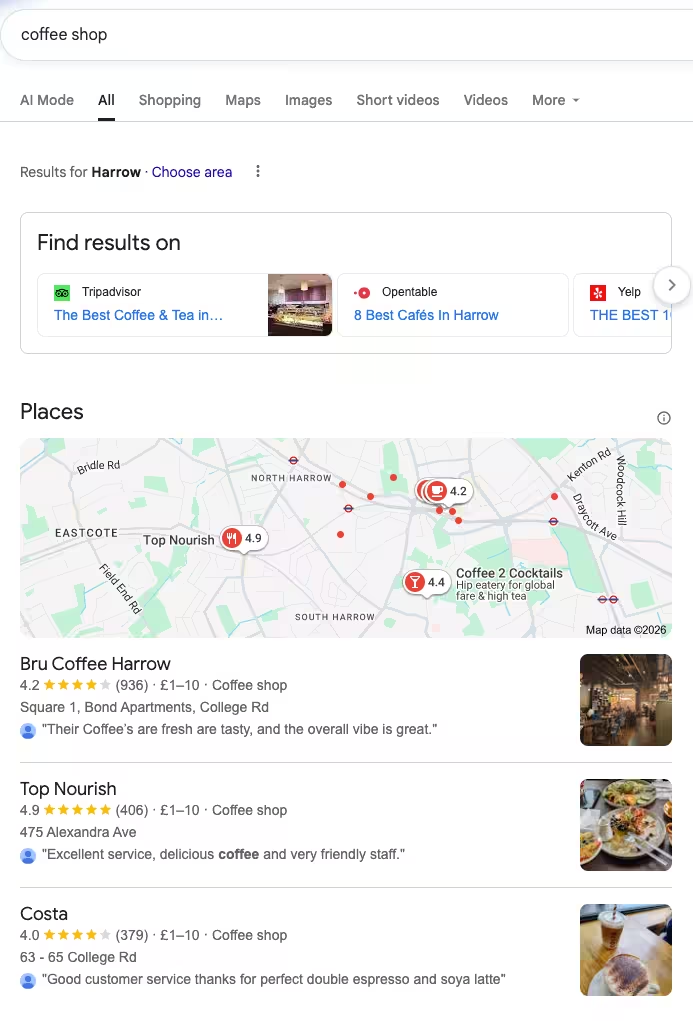
Google reads between the lines using their BERT technology to determine contextual intent. Even without a specific location mentioned, it leverages your GPS, IP address, time of day and past browsing history to decide which local services or products to show you.
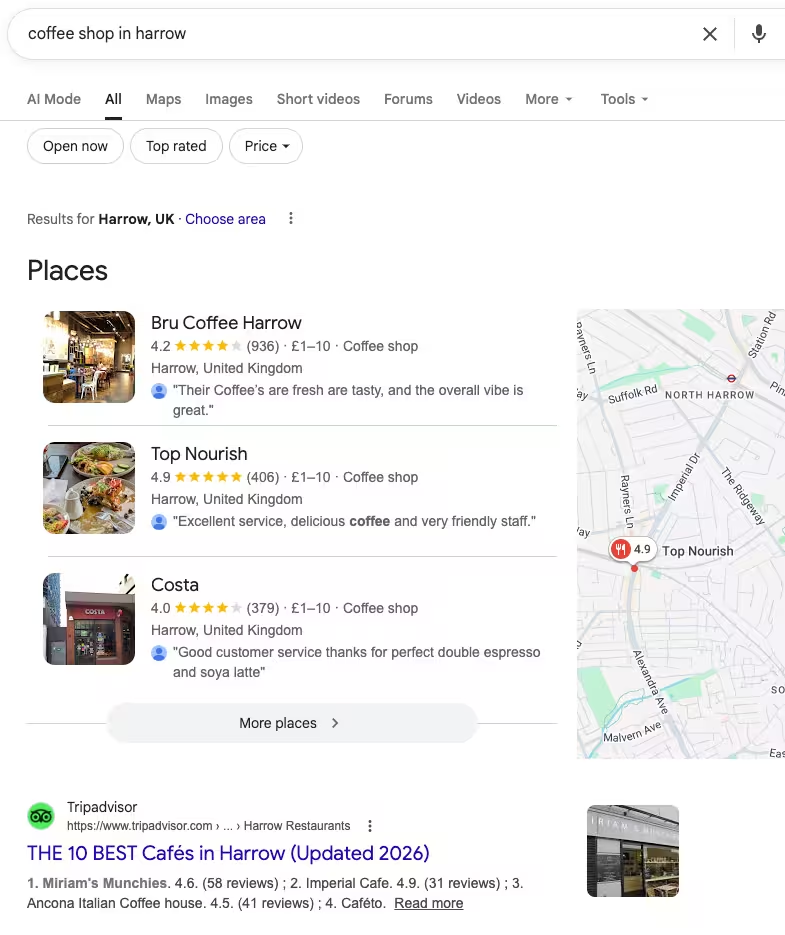
This is when a searcher spells out the exact geography. They don’t leave anything to the search engines’ (e.g. Google, Bing) guesswork. They tell Google precisely where they want that product or service.
The Query
Service or product only
Service or product + location (e.g., Postcode, Borough, or Street)
Examples
“Plumber”, “Coffee shop”
“Plumber in Harrow”, “Coffee shop in Harrow”
SERP View
The Manual Process: (Most Effective)
Start with the real-world data you already have access to. This is often where the most profitable keywords hide.
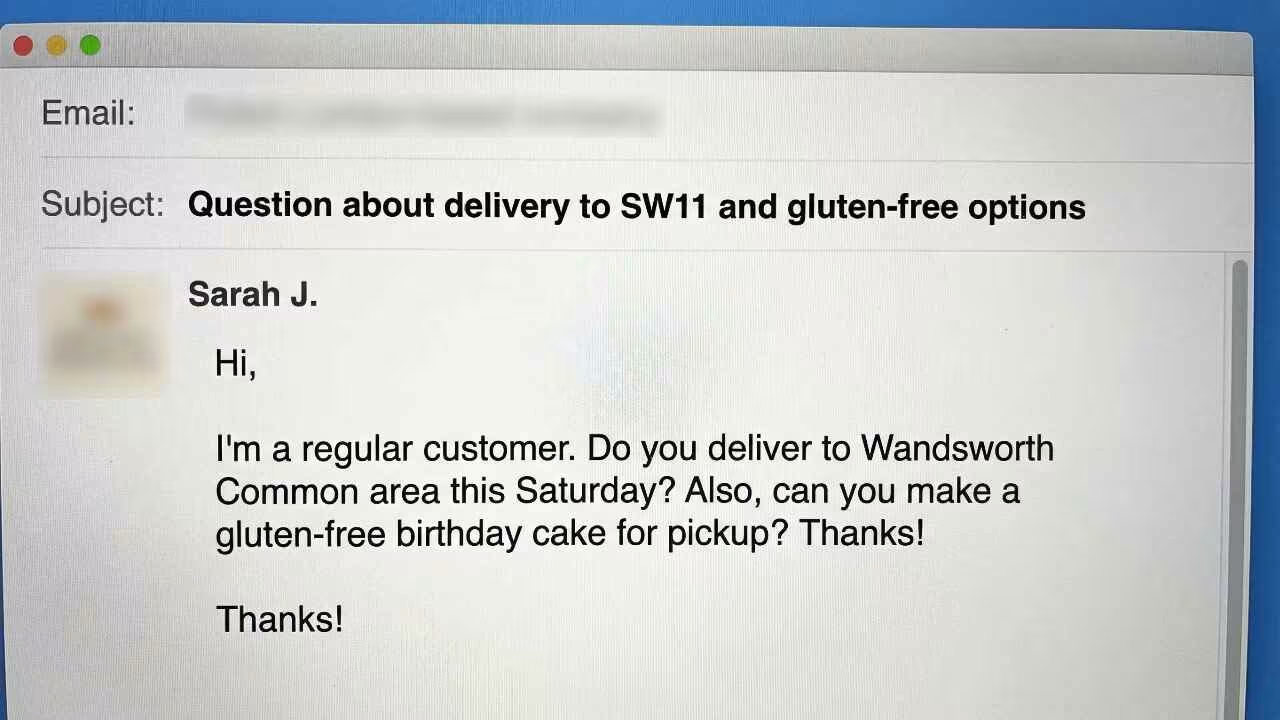
Customer Conversations
Review your sales calls, emails, and interviews. How do they describe their problem?
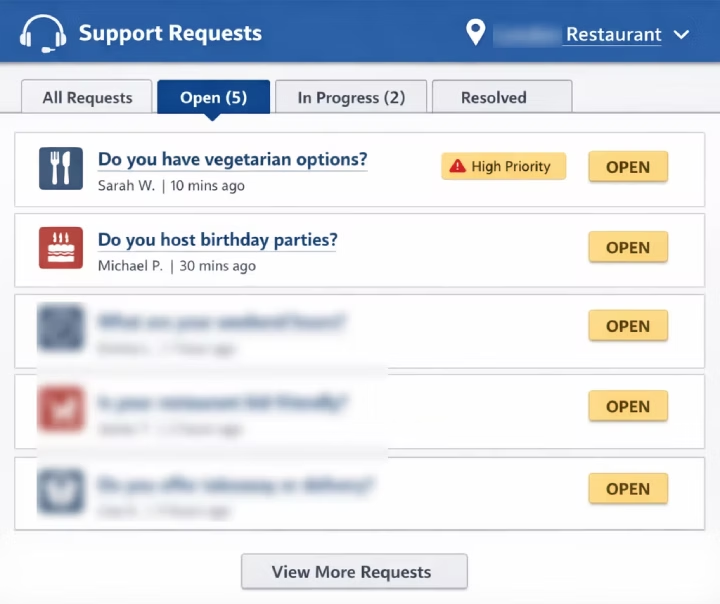
Support Requests
What questions are being asked through your support channels?
Forums & communities: Scan YouTube comments, podcasts, Reddit, and Quora
Your branded social media messages & comments: Facebook, Instagram, LinkedIn, etc
PRO TIP
Identify the conversation prompts your audience is likely to use
Google Native Data
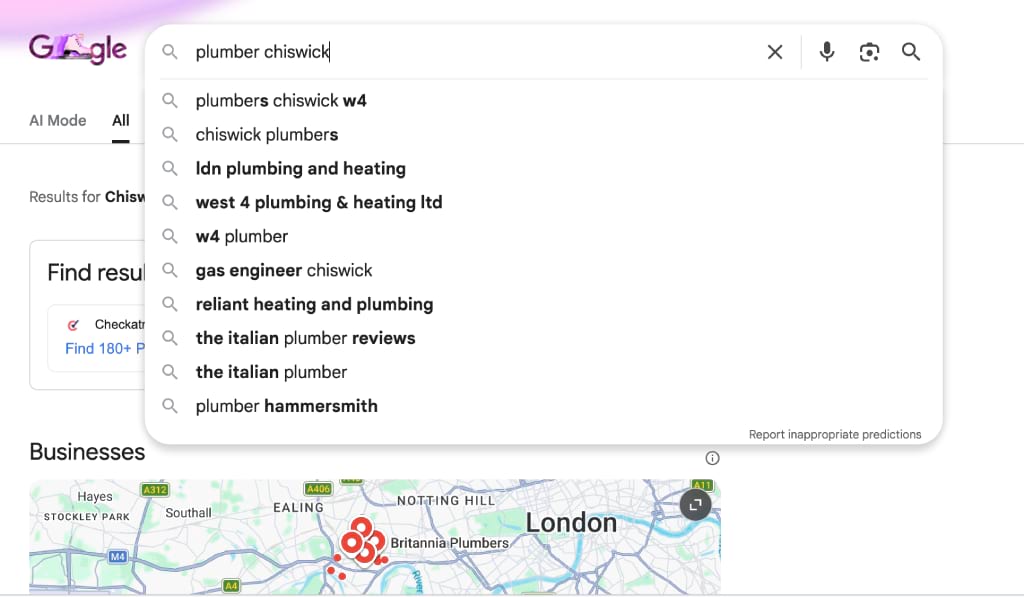
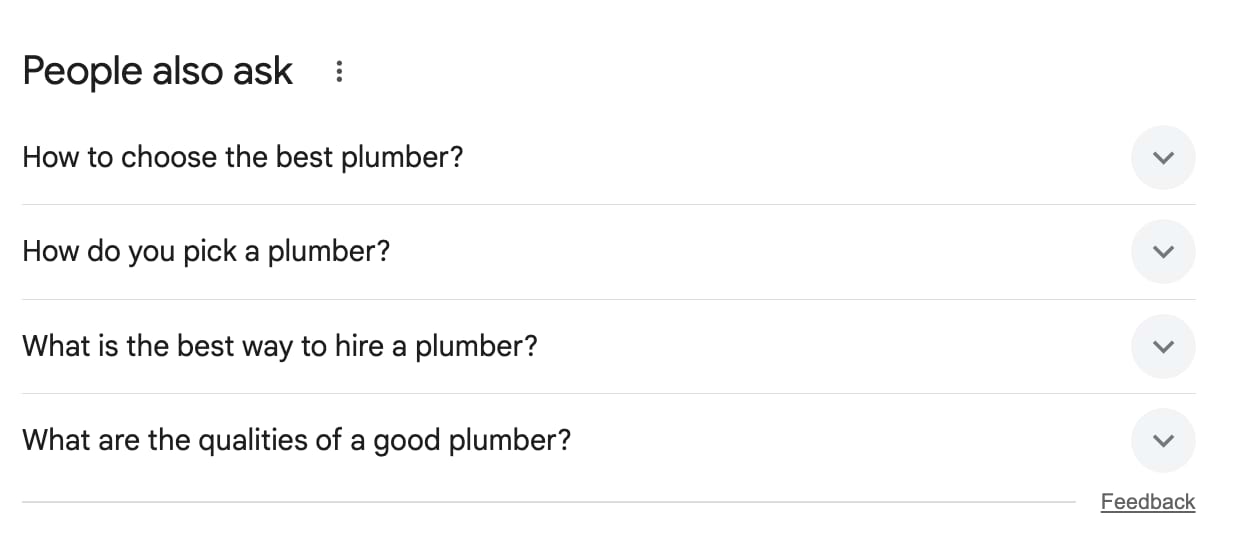
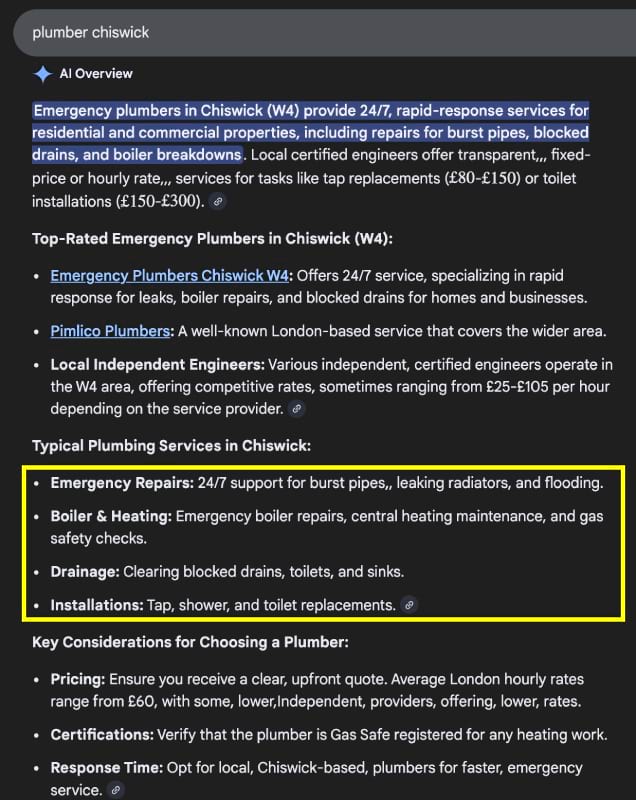
Use Business Profile Performance, Autocomplete, “People Also Ask” (PAA), Related Searches, and the new AI Overviews to see what Google thinks is relevant.
Google Auto-SuggestionsPeople Also Ask (PAA) FeatureAI Overview
Use Gemini or ChatGPT
Let’s start simple. If you are a wedding photographer in Hammersmith, you can ask Gemini or ChatGPT to generate initial ideas.
SIMPLE PROMPT
What specific keywords and search terms do couples in Hammersmith use on Google when looking to hire a wedding photographer?
By feeding a simple prompt into these AI chatbots, you can get a bunch of keyword ideas in seconds. Here they are.
Gemini Keyword Suggestions
ChatGPT Keyword Suggestions
Venue-Specific Keywords High Intent
Ex: linden house wedding photographer
Core Local Search Terms High Intent
Ex: Wedding photographer near me
Localised “Neighbourhood” Terms
Ex: ravenscourt park engagement photographer
Localised + Feature-Specific Long-Tail Keywords
Ex: Pre-wedding photoshoot Hammersmith
Style & “Vibe” Modifiers
Ex: candid wedding photographer
Intent-Driven Planning & Cost Keywords
Ex: How much does a wedding photographer cost UK
Budget & Coverage Modifiers Small, Micro, Value
Ex: last minute wedding photographer
Style & Niche-Focused Keywords Brand + Targeting
Ex: Fine art wedding photographer
Ask follow-ups to discover the real questions your customers have, so you can support their decision-making process
Tool-Based Process: (Less Effective)
Once you’ve compiled your manual keyword list, use free and paid SEO tools to expand your research and analyse competitors’ terms. London agencies typically work with platforms like Semrush, Ahrefs, Moz, SE Ranking, and AnswerThePublic, etc.
In this guide, I’ll walk you through industry-standard tools, but you’re free to use different tools based on your preferences or budget
THE BOTTOM LINE
Do not let go of the tools, and do not pick them up. Commit to using just one tool properly.
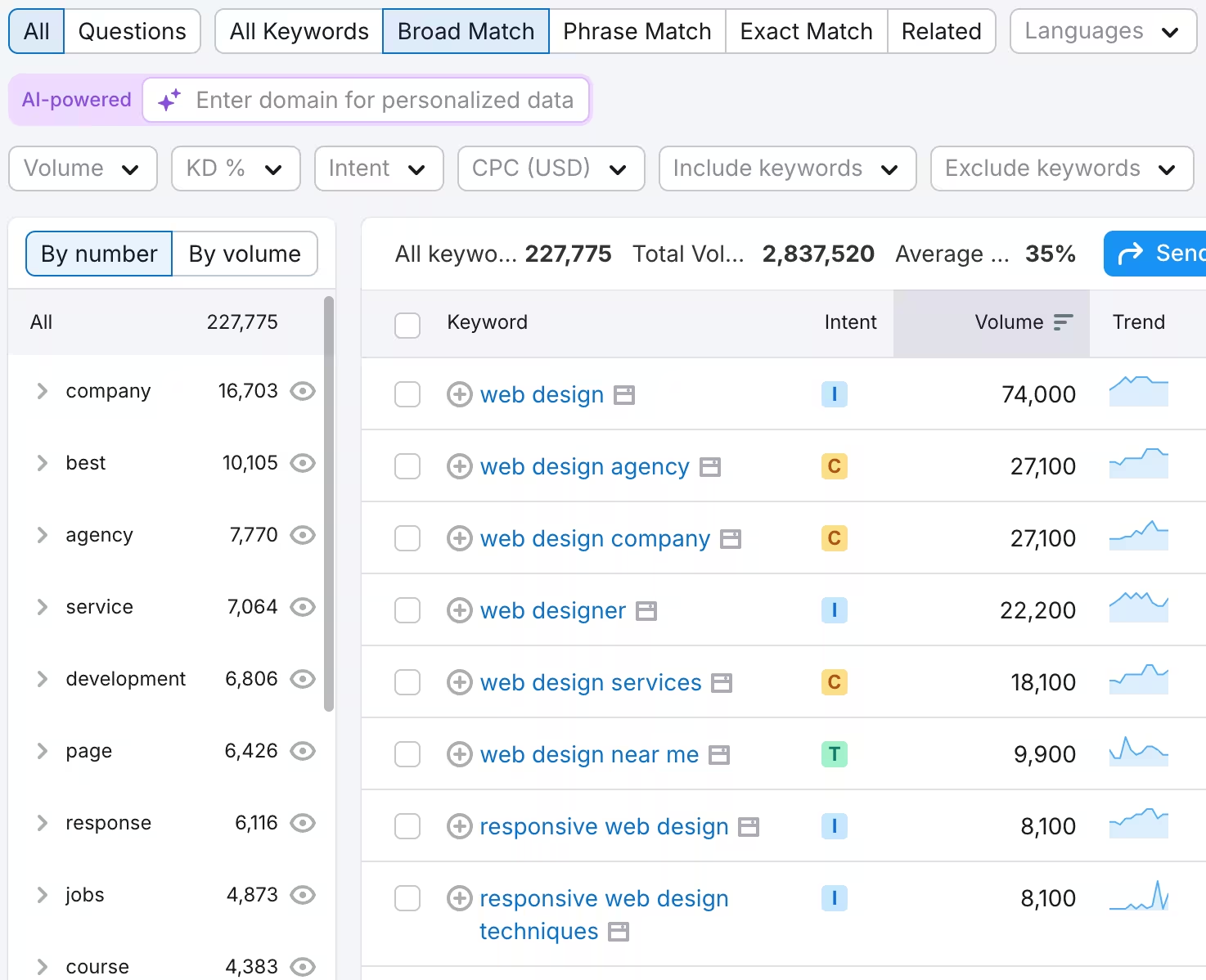
Use Semrush (I’m using paid version)
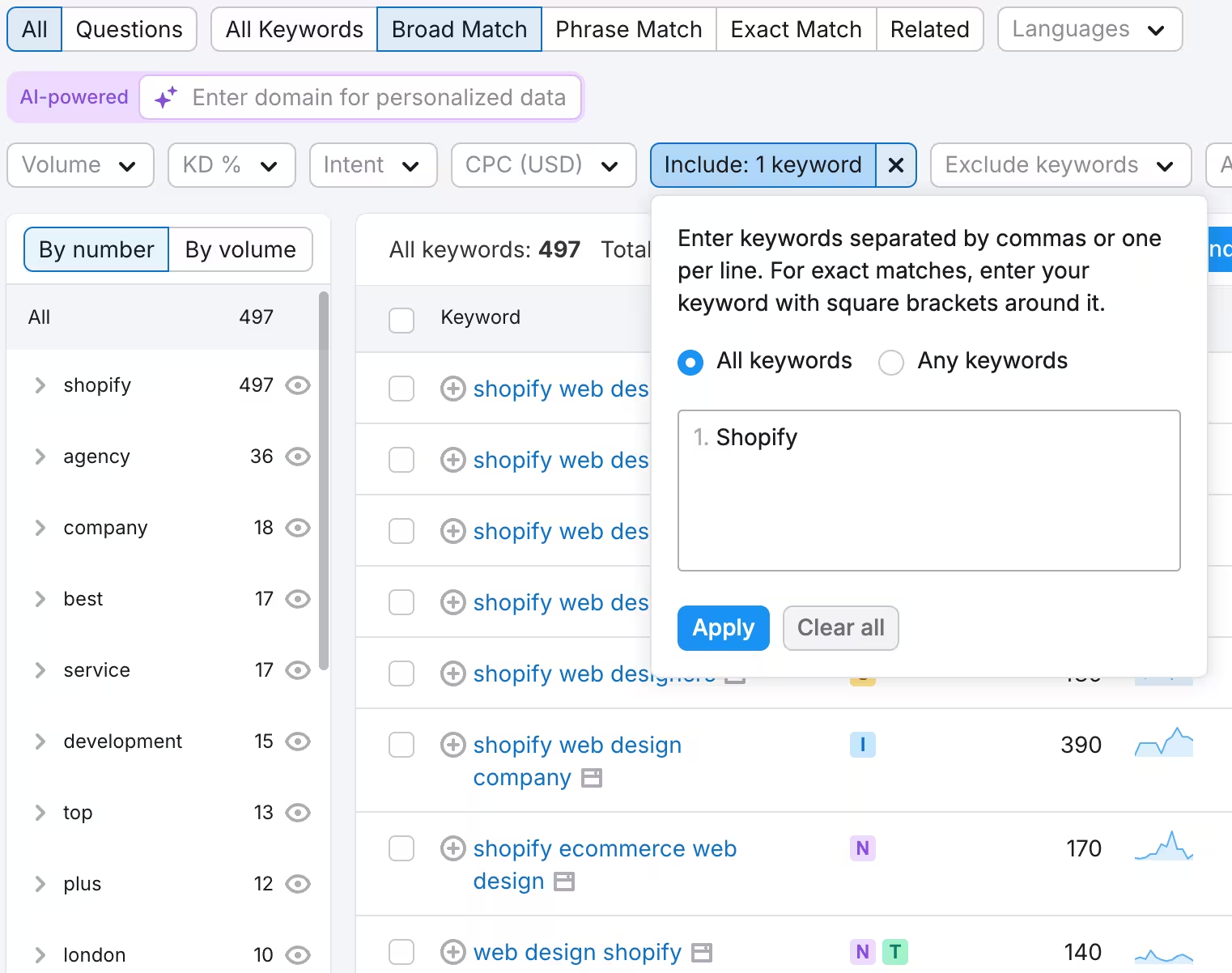
If you’re a web designer working within the London area, head to Semrush→ SEO→ Keyword Magic Tool.
Enter your profession or industry (e.g., ‘Web Design’ or ‘Website Designer’). You’ll instantly get a list of keywords related to your sector, covering platforms like Custom Code, WooCommerce, WordPress, Shopify, Wix, and Squarespace.
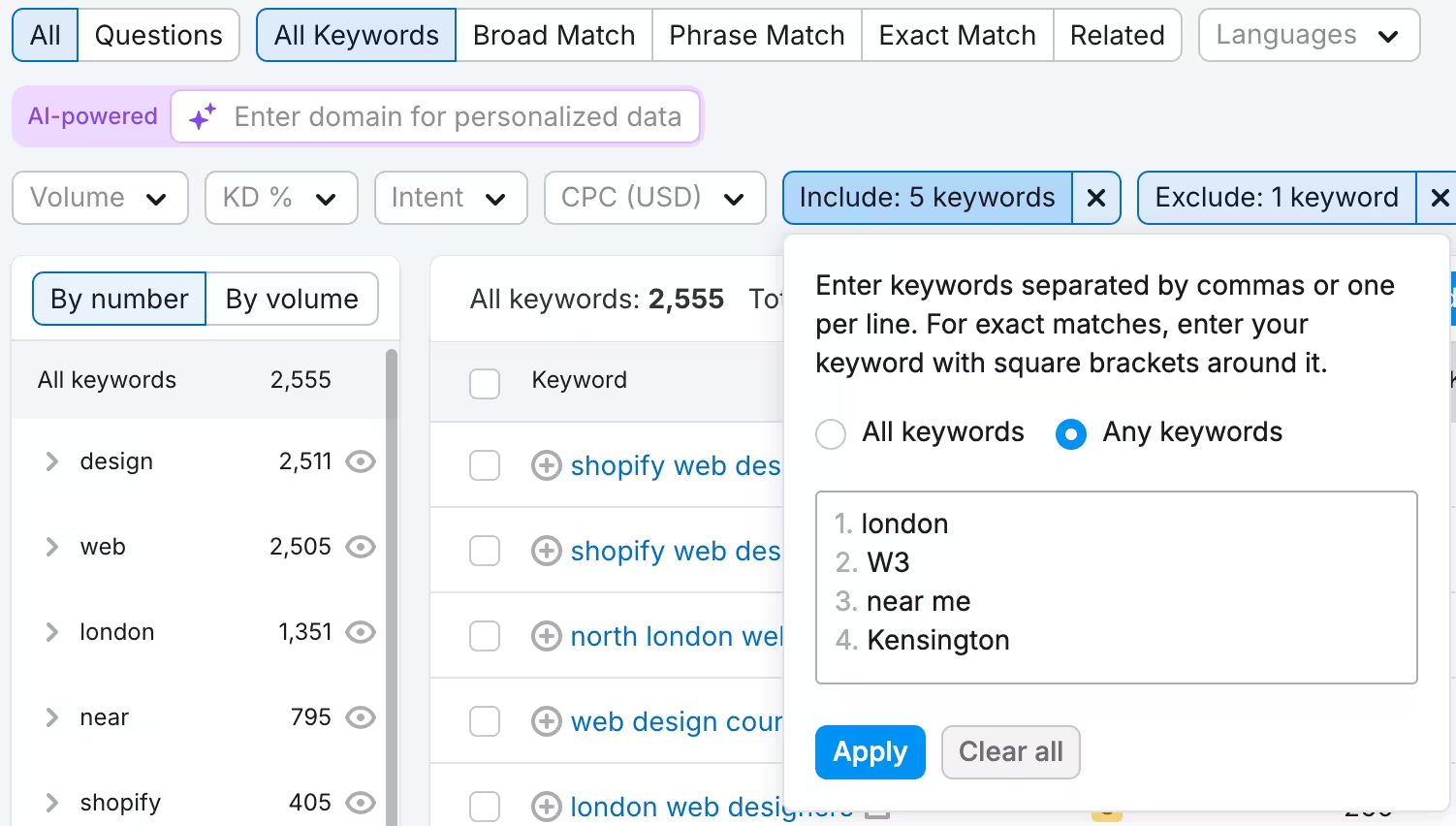
Use the “Include” filter to narrow the list down to your core service. This is also perfect for finding implicit keywords.
Then, simply add your geo-modifiers (city, borough, neighbourhood, or “near me”) to find explicit keywords.
Use Google Keyword Planner (Free)
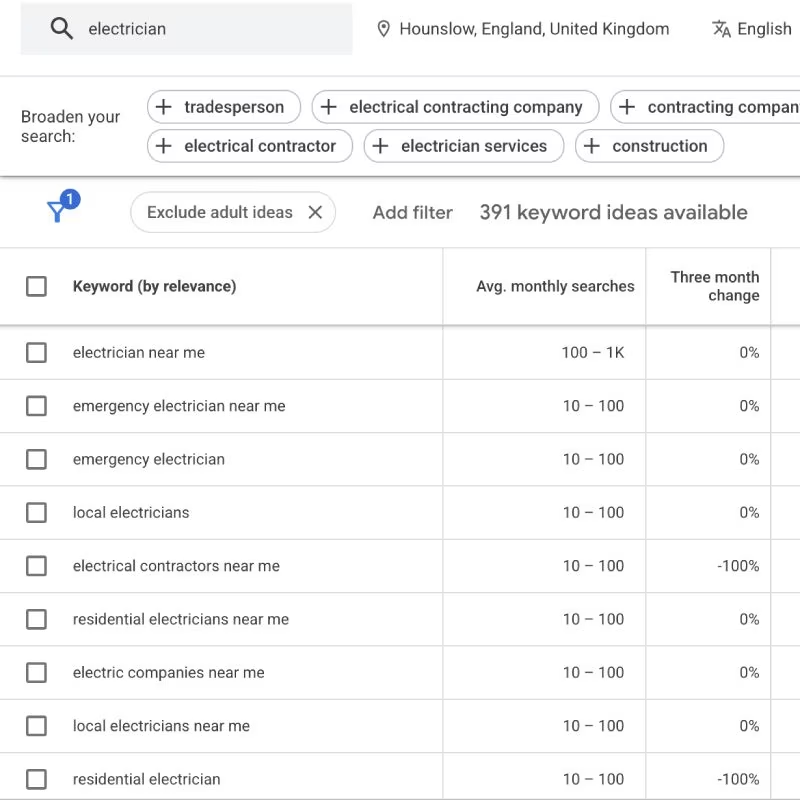
If you run a electrician business in Hounslow city area, head to Google Keyword Planner→ Discover new keywords→ Start with keywords.
Select your specific location and language, then enter your profession as the keyword. Finally, download the full list of ideas and import them into your spreadsheet.
Use Answerthepublic (I’m using paid version)
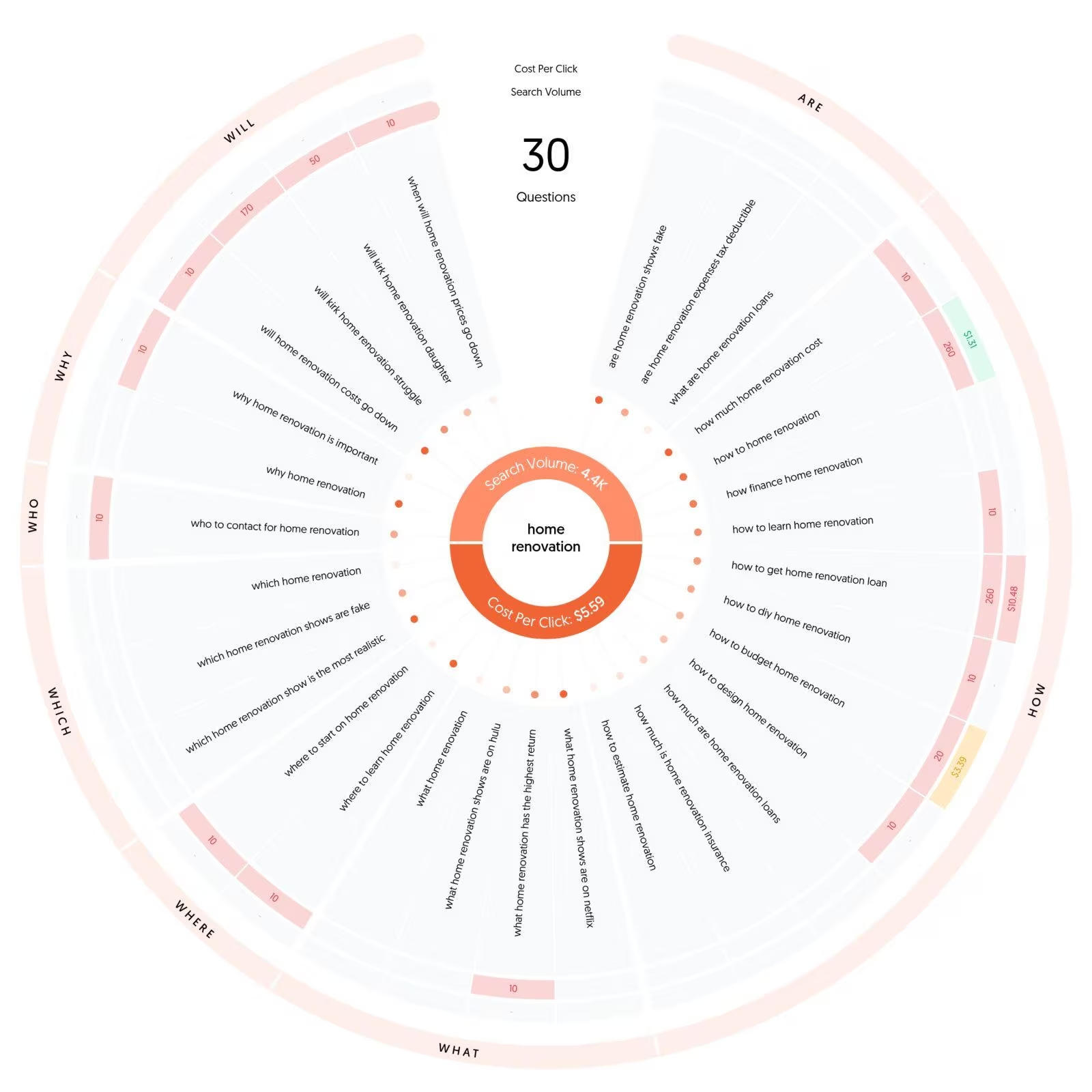
If you run a home renovation firm in Greenford (UB6), you’ll get a breakdown of Questions, Comparisons, Alphabetical, Numbers ,and Related keywords. It includes standard SEO metrics, though many of these technical stats are becoming obsolete in the modern search landscape.
Use Ahrefs (I’m using free version)
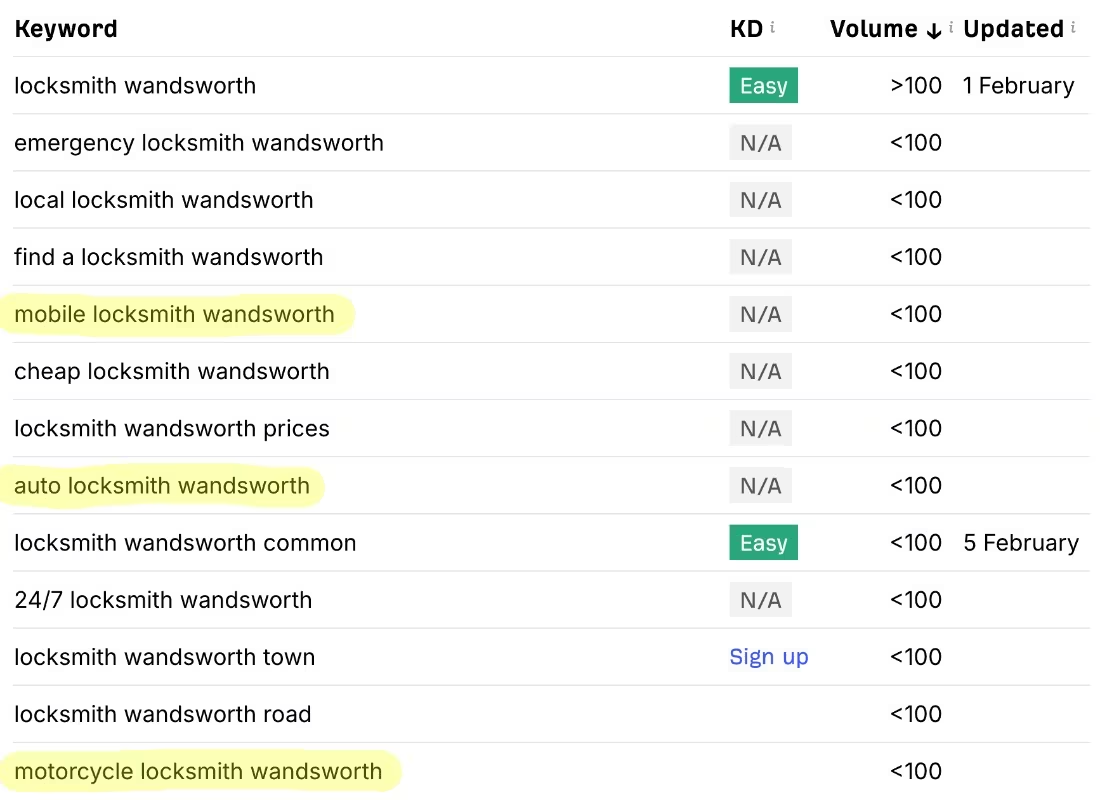
If you operate a locksmith company in Wandsworth (SW18), head to Ahrefs→ Scroll to Footer→ Keyword Generator.
Select ‘Google’ and ‘United Kingdom’, then enter your industry and location to find keywords (note: you can’t filter by city in the free version).
You’ll get a bunch of question-based keywords that reveal the exact problems your customers are facing.
In this stage, your goal is simple: collect ideas about the common problems and questions within your niche or subject. Then, import them into a spreadsheet and you can add a column to spot the source of each keyword idea.
Step 2: Measure & Select Keywords Within Your Subject or Niche
Before digging into it you need to understand first some metrixs. Here they are:
Search Intent: The specific reason or “why” behind a user’s search.
Search Volume: Total monthly searches for a specific keyword or phrase.
CPC (Cost Per Click): The average price a business owner pays each time someone clicks their ad for a keyword
SERP Features: Visual elements like Map Packs, AI Overview, PPA, Featured snippets, etc on Google
Search Trends: How keyword popularity rises or falls over time.
Competitor Analysis: Researching what rivals rank for to find gaps.
Keyword Difficulty: A score showing how hard it is to rank.
Subject Difficulty: The depth of subtopics, entities, and terms required to build subject matter expertise and out-perform the competition
Backlinks: External sites linking to you, acting as digital “votes.”
Search Intent
This is the most crucial part of any successful SEO campaign. If you write high quality content but it does not match the user’s goal or fail to fill what they are trying to achieve, your SEO campaign will fail.
Search intent, user intent, and keyword intent are effectively the same thing.
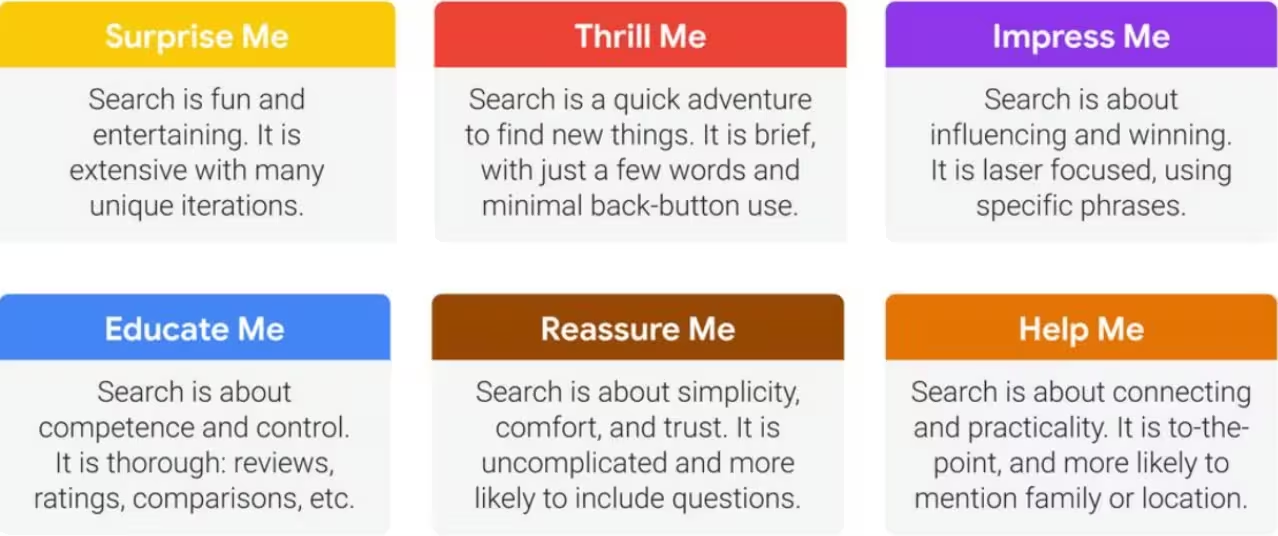
Every user has a different intent when they search on Google. Google has categorised these intents into six types based on the user’s underlying psychological needs. They are Surprise Me, Help Me, Reassure Me, Educate Me, Impress Me, and Thrill Me.
Emon Khan has explained this with proper real-life examples in a dedicated article on search intent. By clicking on “Optimise Search Intent” in the table of contents, you’ll see it first.
However, standard SEO tools are much simpler. They typically categorise keywords into just four types: Informational, Navigational, Transactional, Commercial.
Metric
User Goal
Keyword Example
Informational
To learn something
“how to seal garage door sides and top”
Navigational
To find a specific brand
“Spitfire Garage Doors”
Commercial
To research/compare
“garage door repair orpington”
Transactional
To buy or complete action
“phone number for garage door repair”
To truly win in London’s competitive market, you need to look beyond the tool label. You know they want information, but why do they need it? Are they looking to be Helped (a how-to guide) or Reassured (a safety review)?
How to Determine It
There are plenty of ways to decipher the intent behind a search query. For this guide, I’ll focus on the two methods that are most practical.
Method 1: Customer Insight Method
I mentioned earlier that you must talk to your customers. Now, I’m going to show you exactly how and what to ask them. This is a great source for uncovering user intent and finding fresh keyword ideas that no tool can give you.
For example, let’s say you run a cleaning business in Sutton
The Golden Questions:
The ‘What’: What exactly did you type into Google before you found us? [Keyword Ideas]
The ‘Intent’: Were you just looking for advice on sofa cleaning, or were you looking to hire a company immediately? [Uncover Intent]
The ‘Trigger’: When did you first realise you needed a professional? Why didn’t you just do it yourself? [Pain Points]
The ‘Platform’: Where did you go first? Did you check a local shop, search on Google, or ask ChatGPT, Gemini or Yelp? [Audience Research]”
By the way, don’t treat this like an MI6 (British intelligence agency) interrogation. You aren’t grilling a suspect. Approach this with genuine respect. Listen more, and talk less.
NOTE
This is why building a genuine relationship with your clients is crucial. Every customer wants to be heard, and if you ask the right questions, they‘ll write your SEO strategy for you.
Method 2: Decode The SERP
Skip the guesswork. Search the keyword yourself, click the top results, and reverse-engineer the intent. The easiest way to know what Google thinks a user wants is to look at what it’s already ranking.
Pro Tip: Use this prompt in ChatGPT or Gemini to analyse it for you.
PROMPT
Analyse the keyword [insert keyword] to determine the precise consumer need, search intent and the specific content types and elements the user expects to see to satisfy this intent by simulating a live Google SERP for [insert location].
Primary (Consumer Need): Choose from: Surprise Me, Help Me, Reassure Me, Educate Me, Impress Me, or Thrill Me.
Secondary (Search Intent): Choose from: Informational, Navigational, Transactional, or Commercial.
BEAR IN MIND
When users search, they’re being tracked automatically. Google uses their search & browsing history, device & browser context, and past interactions with results to personalise the results. This means that every user’s SERP is different. What you see mightn’t be exactly what your customer sees.
Search Volume
During keyword research, remember this golden rule: Webpages rank for tons of keywords, not just one.
Warning: Don’t trust SEO tools blindly. There are multiple reason behind it.
Reason 1: You’ll often see keywords where tools say “0 searches per month.” Logic suggests nobody searches for this term. But if nobody searches for it, how did the tool find the keyword in the first place? The fact that it exists in the database proves someone, somewhere, searched for it.
Reason 2: Think about it: To be a true Subject Matter Expert (SME) in your field, let’s say you need to cover 20 core topics. If you only write about the 12 topics that show high search volume, you’ve left an 8-topic gap in your knowledge base. Are you really an expert? No. You need to cover the zero-volume topics to complete the puzzle. Don’t let search volume dictate your expertise. Studies consistently show that long-tail keywords convert better. Customers hire specialists.
I’m not saying ignore search volume. I’m saying don’t depend on it alone.
You need to align with your customer’s journey by delivering the right information exactly when they need it
PRO TIP
Use smart internal linking to help your users navigate, even if the keywords have zero search volume
Search Trends
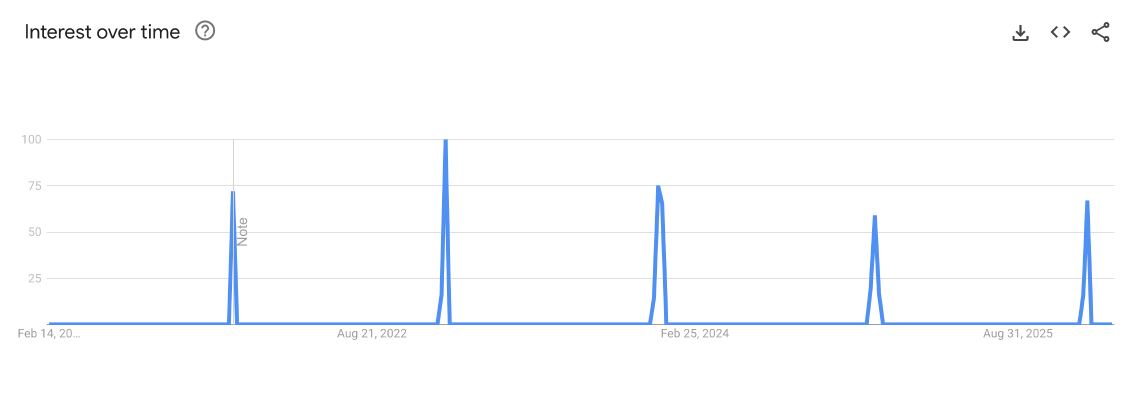
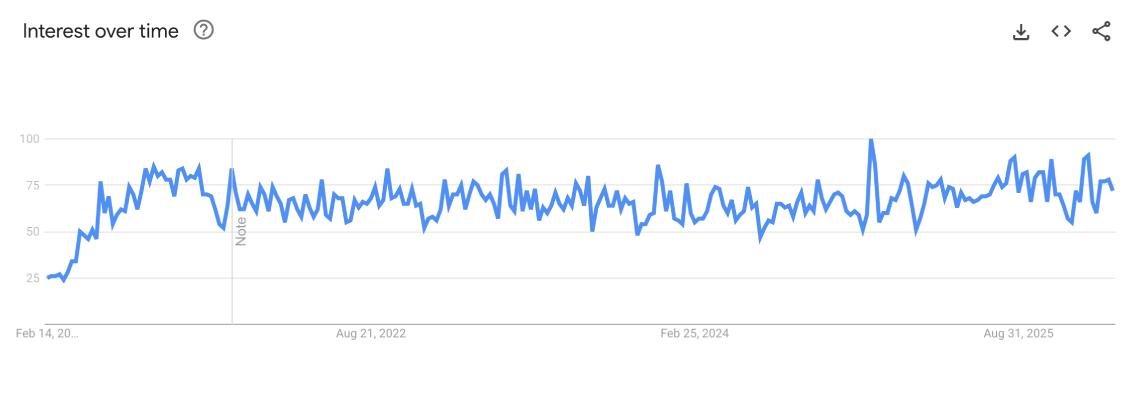
Search trends typically fall into two categories: seasonal and evergreen
Seasonal vs Evergreen: Key Differences
Feature
Seasonal Trends
Evergreen Trends
Definition
High search demand that spikes for a short time. Solves a one-off, timely problem
Search demand remains consistent and solves permanent, ongoing problems
Example
‘New year eve fireworks near me’ or ‘Summer AC repair’
‘Plumbers in London’ or ‘Coffee shops near me’
Google Trends
Pros
High revenue for 1–2 months. Builds quick brand awareness
Reliable, consistent revenue
Cons
Can be messy to manage
Requires long-term content maintenance
Marketing Effort
Low (Optimise once and run)
High (Update it regularly)
My Take
My Take: Target these, make your money, then reinvest it. Yeah?
My Take: Solve one problem perfectly. Be the expert
Keyword Difficulty
Keyword Difficulty is a metric that indicates how hard or easy it is to rank in first page of SERP for a specific search term. Different tools use their own scoring systems. For instance:
Semrush classifies 0 to 14 as Very Easy, 15 to 29 as Easy, 30 to 49 as Possible, 50 to 69 as Difficult, 70 to 84 as Hard and 85 to 100 as Very Hard.
Ahrefs classifies 0 to 10 as Easy, 11 to 30 as Medium, 31 to 70 as Hard and 71 to 100 as Super Hard.
However, in the age of AI, this concept has evolved into something I call Subject Difficulty. I will explain this fully in the next section.
I’VE FOUND THAT
I ran an experiment across multiple websites to test their score accuracy. I selected all keywords relying purely on their KD score. I remember picking some keywords that were over 51.
I observed that keywords with a KD of 30 and below and keywords with a KD above 50 showed different behaviours. The keywords with a KD above 50 ranked relatively faster, whereas those below 30 took a much longer time to rank on the first page.
Note: I did not create any types of backlinks.
Subject Difficulty
Subject Difficulty (SD) means measuring the knowledge gap between a basic overview and genuine expert-level content. It evaluates the depth, breadth and specialised knowledge you need to outperform the top competitors in your niche.
Before we dive into subject difficulty, I want to share my opinion.
Imagine you’ve been accepted into Imperial College London for an undergraduate degree in Artificial Intelligence. Now you need a tutor for extra help. Who would you choose? A generalist who knows a little bit about maths, economics, biomedical science and physics, or a specialist expert who understands every single topic within AI?.
In Subject Difficulty (SD), we measure how challenging it is to rank for an entire topic or niche, based on your authority across all related keywords and content. While in Keyword Difficulty (KD), we measured how challenging it was to rank for one specific search term.
Previously, we analysed our competitors based on content, keyword position, core web vitals, link profile and more to outrank them in general SERPs. In the AI era, now we also need to analyse our competitors within a niche to appear in AI Mode, AI Overviews and chatbots.
It’s no longer about winning a single keyword, it’s about owning the whole conversation.
FOR INSTANCE
Think about how you would choose the best tutor offline. You might meet a senior student at your university and ask if there is an AI tutor available. When they suggest someone, you would likely ask about their experience, price, subject matter expertise, qualifications, which college they attended and even ask for a personal review.
Online, Google does exactly the same thing to share the best tutor for you.
Although Google introduced query fan-out in 2025 specifically for longer, more complex queries in AI mode.
I reckon they’ve been applying this kind of holistic method to generate blue links as well.
There are multiple reasons why you need to avoid relying solely on the Keyword Difficulty score and consider adopting Subject Difficulty in the AI era.
GOOGLE’S FEBRUARY 2026 DISCOVER CORE UPDATE
“Since many sites demonstrate deep knowledge across a wide range of subjects, our systems are designed to identify expertise on a topic by topic basis.”
This clearly indicates that Google is prioritising subject-matter expertise when evaluating content.
How to Determine Subject Difficulty
Why did I explore every possible idea and problem users face within the topic at the first stage?. Because this allows you to assess whether your competitor genuinely solves those problems and demonstrates true subject-matter expertise.
Once you’ve identified your competitor, follow these four steps to analyse their subject difficulty.
Step 1: Use the [site:] search operator in Google
Step 2: Copy and paste one keyword or topic idea from your spreadsheet.
Step 3: Review their content to determine whether they have written specifically on that topic and adequately addressed the problem.
Step 4: Analyse deeply how much they’ve covered entities, semantic terms, whether they demonstrate experience and expertise, etc.
PRO TIP
Evaluate their keyword positioning and spot any intent mismatches where they failed to answer the user’s question properly.
For instance, you’ve identified that a comparison type content is needed to satisfy user intent for a specific keyword. But your competitor has written general blog type content to fill that same intent.This is an intent mismatch (I’ve written about this in Step 3).
There are a lot of angles you can measure to see how hard your niche is to rank and convert.
Competitor Analysis
Effective keyword research for the London local market is impossible without proper competitor analysis. This happens on multiple layers. I’ve mentioned just two layers here.
The Digital Visibility Layer: This means auditing their digital assets (their website, Google Business Profile, Bing, Business Directory, Social media, etc.)
The Commercial Layer: Here, you need to dig deeper into their commercial ecosystem: their marketing channels, pricing models, service features, value proposition, even their years of experience, etc. You must also understand the business beyond the keywords.
I’VE FOUND THAT
There is a direct connection between these two layers. Revenue is the biggest engagement of a business. Trust isn’t truly built until a customer actually buys your product or books your service. Until money changes hands, ‘trust’ is just a theory.
In one scenario, users might visit several pages and show general engagement, but at the end of the day, nobody books an appointment. That means they didn’t trust you or your business.
In another scenario, a visitor might only view two pages on your site, then immediately book a slot. In this case, even with minimal browsing, they have already decided to trust you.
For the purpose of this guide, I’ll stick to “The Digital Visibility Layer” as much as is needed for effective keyword research. The full competitive analysis (visibility + commercial layers) is a massive topic on its own, so I’ll cover that properly in a separate, dedicated article.
How to Do It
There are plenty of ways to analyse your competitor that SEOs use. However, I would recommend starting with a manual approach.
For example, if you are an orthodontist in the Croydon area.
Step 1: List your neighbourhood orthodontist clinics that offer the same type of service. Collect their website, business profiles, location distance from your clinic (research shows distance matters for conversion), opening hours (emergency users always want to solve their problems urgently), and other key details. You can also find your rivals by simply searching on Google.
Step 2: Filter them into direct and indirect competitors. Sort them by giant, stable or new entrant.
Step 3: Analyse their Subject Difficulty (ignore KD), subject gap, local backlinks, customer acquisition model and even the behaviour they show towards their customers.
BEAR IN MIND
Competition is between equals.
For instance, imagine you are a football player and want to make the England national football team. What would your approach be?.
First, you perform well on your own field. Then, you might get hired for a local tournament. Next, your parents might sign you up to a good local club. Only then might you be chosen to join the national team.
At that point, Phil Foden becomes your competitor. But if you think he is your competitor right from the start, you are making a mistake.
Step 3: Map & Select Content to Satisfy User Intent
There are two types of mapping frameworks I will use in this section: buyer search journey mapping and keyword mapping.
First, let me introduce buyer search journey mapping. This means identifying and mapping the specific intent and touchpoints that guide a user from initial curiosity through to a final purchase decision.
Buyer Search Journey Mapping
Once we understand the why behind a search, we can deliver precisely what users need at each stage of that journey.
EXAMPLE 1
In the HVAC niche, a user’s initial curiosity might start with a symptom related question like ‘Why is my AC running but not cooling?’ or ‘Furnace making a loud banging noise.
As they seek to diagnose the problem, their searches become more focused, such as ‘Refrigerant leak signs’ or ‘Cost to replace a cracked heat exchanger.
If they realise a repair will be enough, their searches turn into ‘AC repair near me’. However, if they realise a repair might be too costly, they move into the research phase. They start exploring replacements with queries like ‘Ductless mini split pros and cons’ or ‘Geothermal heating cost vs savings.
Finally, when ready to commit, their searches turn highly transactional with terms like ‘Best HVAC installers for heat pumps’ or ‘Get a quote for new AC installation near me.’
I’ve shown how keywords can lead towards products or services. A user who has never set up an AC before and a user who has set one up previously will have very different search behaviours.
I’d like to share the interactive whiteboard buying journey I recently experienced.
Before that, I need to introduce three additional types of keywords that will help you better understand this journey: short-tail, medium-tail, and long-tail keywords.
Here’s a brief summary.
Type
User Goal
Keyword Example
Length
Short-Tail
Broad terms typically used during initial exploration, brand evaluation, or early buying consideration.
“Interactive whiteboards”
1-2 words
Medium-Tail
More specific phrases used for topic exploration, often informational in nature.
“interactive whiteboard features”
3-5 words
Long-Tails
Highly specific queries used for deeper exploration when seeking a precise solution or detailed answer.
“Can I run YouTube and Zoom simultaneously on an interactive display”
6 words or more.
Here is my journey
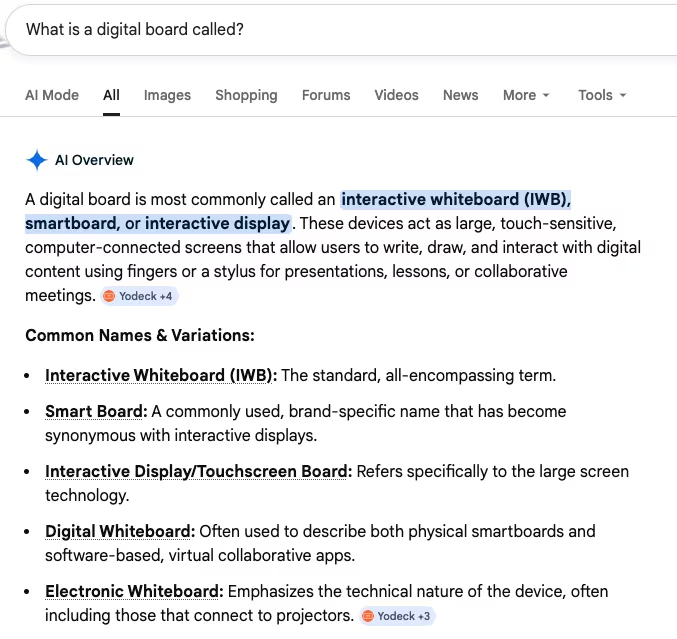
When I decided that I needed a smart board for my agency, I didn’t even know what it was called. To find out the name, I simply searched on Google: ‘what is a digital board called?’. That was the first time I learnt what it is actually called.
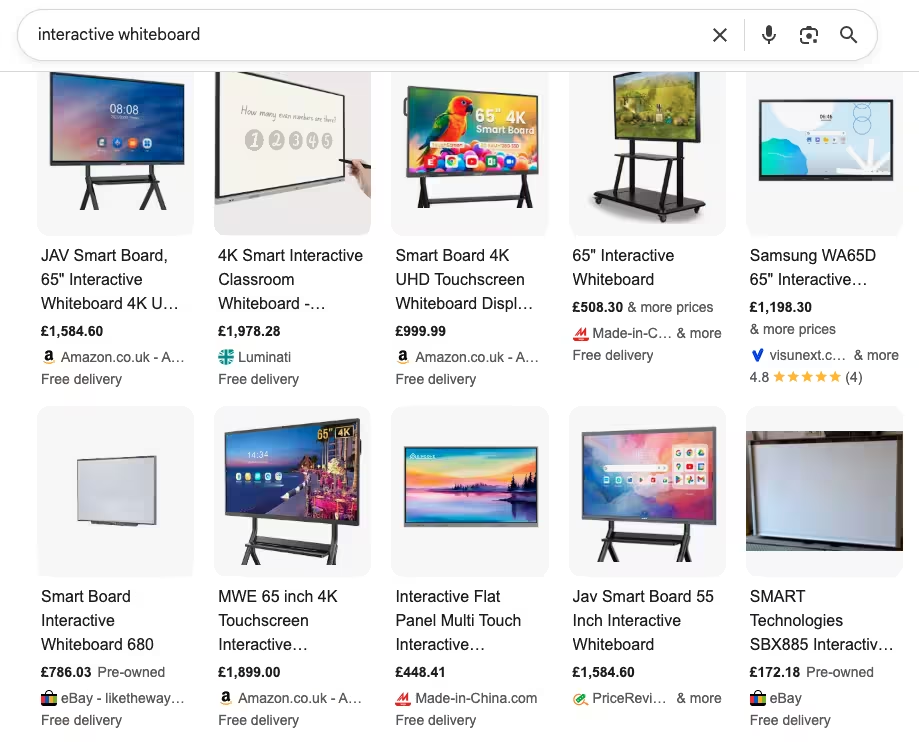
Then, I searched for ‘interactive whiteboard’. I discovered a wide range of information, including which brands were offering smart boards, prices, display sizes and more. However, I was surprised by the cost.
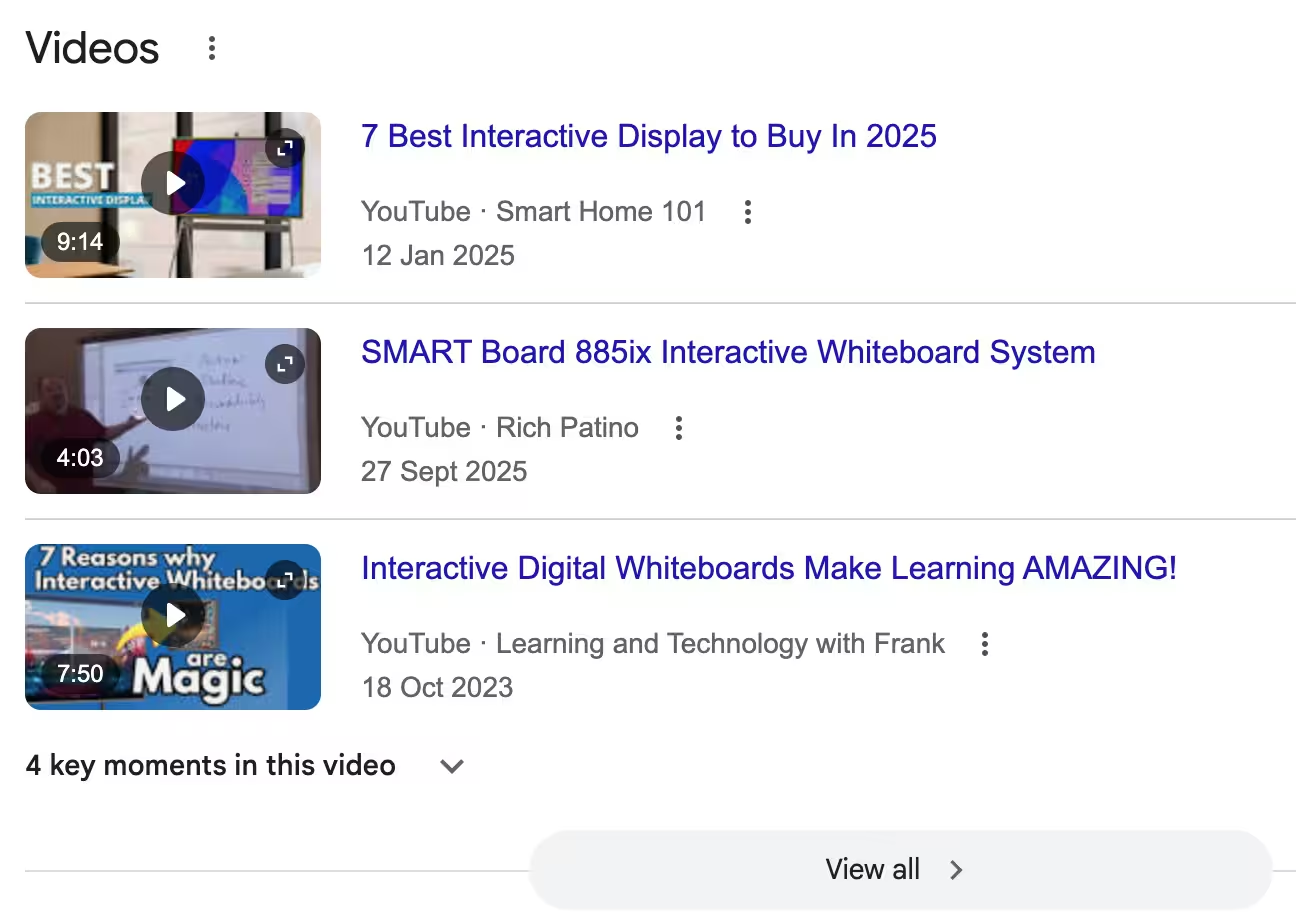
I clicked on a video and switched platforms from Google to YouTube. I remember watching a lot of videos on YouTube and discovered more brands, features, pros and cons, limitations and more.
I recall shifting back and forth between YouTube and Google repeatedly to find precise answers. Whenever I encountered a new feature, I would return to Google and search for queries such as: “Is [feature name] available on [specific brand]?”.
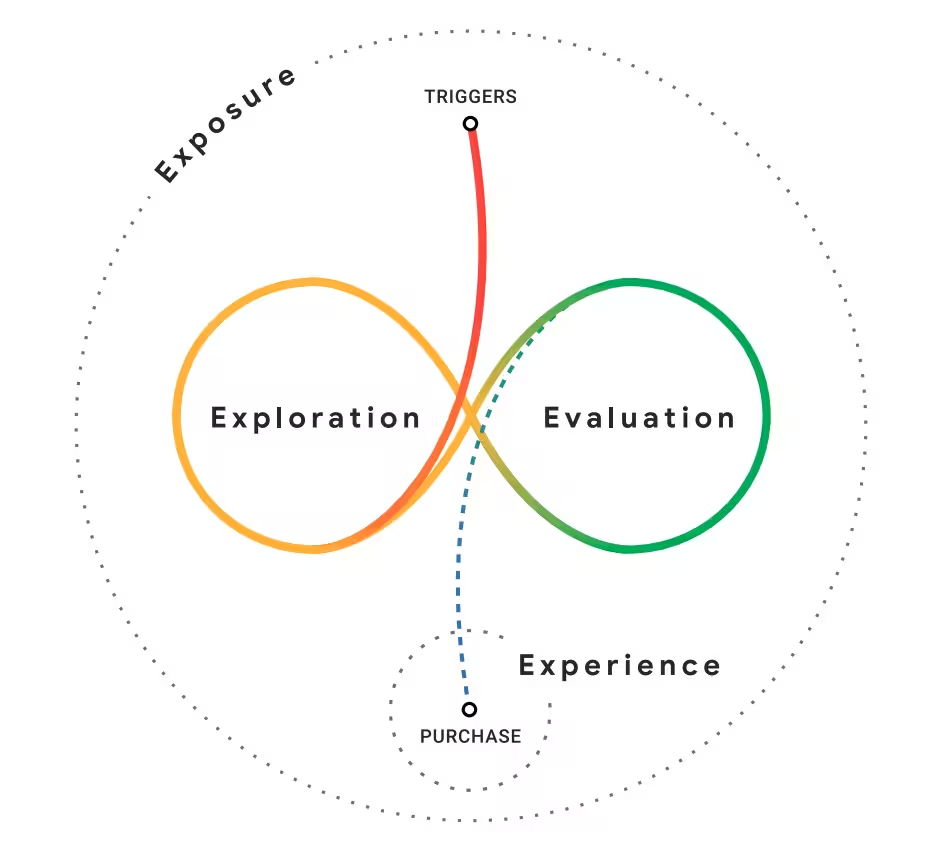
During this phase of exploration and evaluation, I got confused about which brand to choose. Google calls this the ‘messy middle’ of search.
PRO TIP
SEO is also about positioning your brand so that when your target audience encounters a problem, your content delivers the right solution at exactly the right time and clearly communicates that you’re there to help.
In the meantime, I’ve used my own buying journey to explain the problems users may encounter and the solutions they can expect to solve those problems.
Now you need to understand the situation in which your users are searching for information. Are they looking to learn from you or seek reassurance? You also need to know which stage they are in: exploration or evaluation.
Based on this understanding, you should provide the right solution and support them throughout the process.
Now the question is: what type of content format can best satisfy their search intent or solve their problem?
Here is some ideas:
How to guides
Comparison Pages
Statistics
Interactive tools
Templates
Now align the keywords with user intent, the stage of the journey and the appropriate content format. Here is a practical alignment example in the roofing niche.
Keyword Mapping
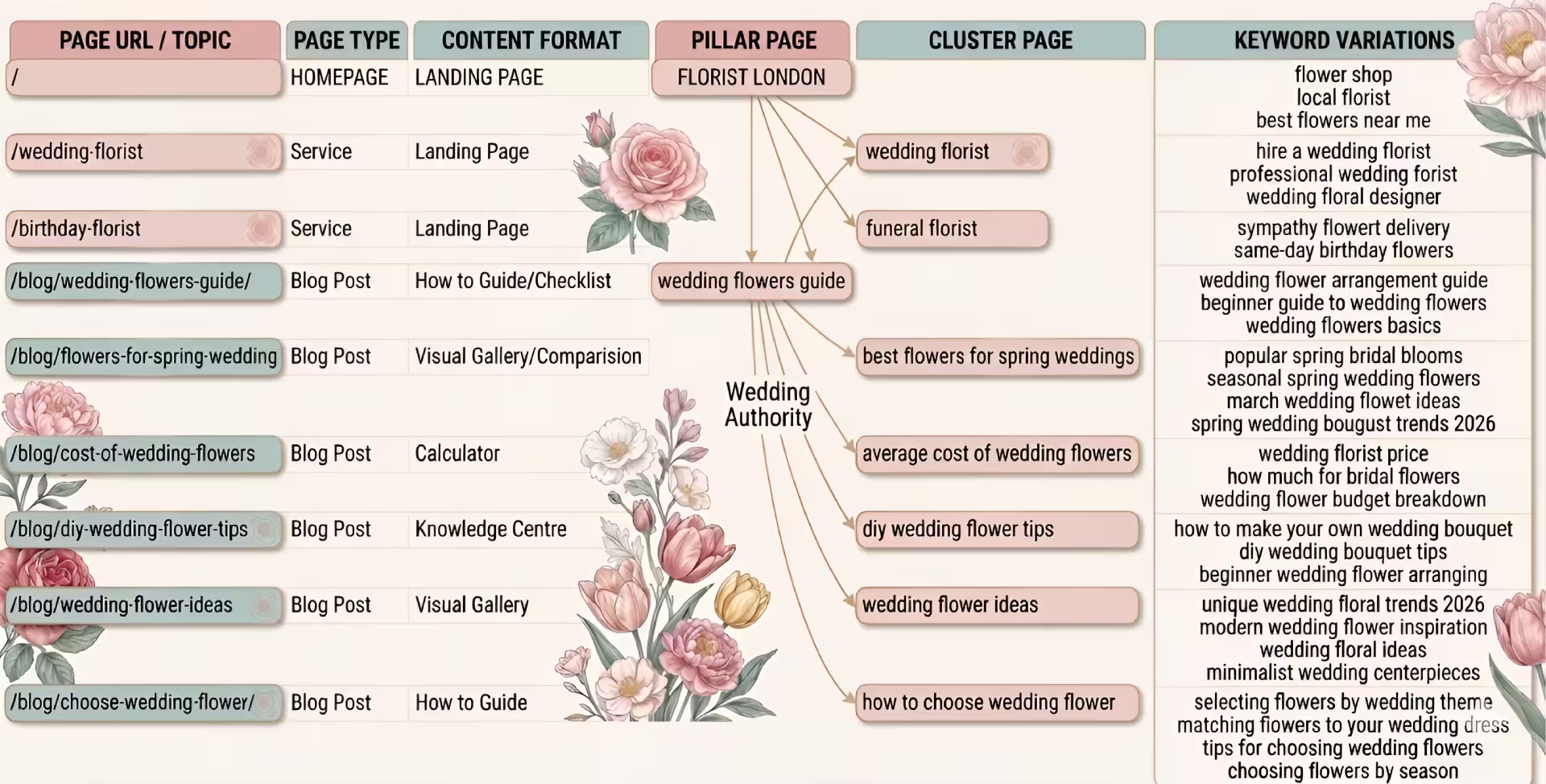
Creating a map to assign which keyword you will target on which page or which problem you will solve is called keyword mapping.
Here is an example of a keyword mapping template for a florist that shows the relationship between page URLs, content formats, pillar pages, cluster pages, and keyword variations.
There are several reasons why keyword mapping is important, such as:
Better Site Architecture
Avoiding Keyword Cannibalisation
Matching Content to User Intent
Identifying Subject Gaps
Strategic Internal Linking
In my view, you now have a clear roadmap for conducting keyword research for your business. If you have any questions or need further clarification, please feel free to contact us.
Announcement: We are creating customised versions for different local businesses so they can follow a detailed guide tailored to their own niche.
Join our newsletter to stay updated.
Why need audience research before doing keyword research?
Metric
Without Audience Research
With Audience Research
Improvement
Average Conversion Rate
1% – 2%
3.5% – 5%+
50% – 250% Increase
Cost Per Acquisition
High (Wasted spend on broad terms)
Low (Optimized for intent)
30% – 50% Decrease
Ad Click-Through Rate
Low (Generic messaging)
High (Personalized messaging)
2x Higher
I’m summarising why you need to conduct audience research first. Without proper audience research, you may not understand who your real customers are, and you won’t be able to market your products and services the right way. This can negatively affect your return on investment (ROI).
There are two major benefits of doing audience research.
Understand customers behavior & platform
Understand customers demographics
Behaviour & Platform
Who they are
What they like
How they behave/talk/describe
Where they are mostly active
What contents they like to consume
Demographics
Age: A 23-year-old and a 50-year-old customer don’t think, decide, or even search the same way.There is huge mental gap.
Gender: It is hard to sale any product or service to female compare to male. Usually london’s female are more judgemental then male.(might be different for another country)
Income/Salary: Budget isn’t just a minor detail, it’s often the deciding factor in whether a visitor becomes a customer.
PRO TIP
Consider their profession and job role to better understand their needs, priorities, and decision-making process.
Real World Example
How Audience Research Changes Everything
Let’s look at how audience research transforms a generic SEO strategy into a high converting one.
🎯 Meet Your Ideal Customer
👤WhoA professional, aged 45+, living in London
⏱️LifeMid-level job, ~48 hrs/week — time-poor
💷BudgetStable, average income — not luxury market
🌿GoalImprove his garden with new landscaping
Phase 1 — The Guesswork
Without Audience Research
A generic strategy targets high-volume keywords like “luxury garden design London”.
Your page attracts people seeking expensive, high-maintenance gardens. Our 45-year-old Londoner clicks away — no time for exotic roses, no budget for a £50k overhaul.
📉 Low-quality traffic, poor ROI
Phase 2 — The ROI Strategy
With Audience Research
By understanding his real life — lack of time and budget — you pivot entirely.
You’re selling “a beautiful garden that takes zero effort to maintain”. Your content speaks his language, solves his constraint, and respects his budget.
📈 Relevant traffic → reliable customers
In the next article, I’ll guide you through a step-by-step process for researching your audience and learning how to market your products and services more effectively to achieve a stronger return on investment (ROI).
Once you fully understand your customers and the platforms where they search such as Google, Bing, Yandex, DuckDuckGo, and even YouTube you can begin conducting local keyword research for SEO.
The form has been submitted successfully!
There has been some error while submitting the form. Please verify all form fields again.